
 Print
Print Word
Word PDF
PDF

|
| Name: _________________________ | Period: ___________________ |
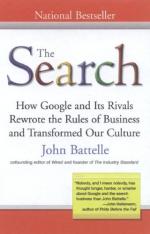
This quiz consists of 5 multiple choice and 5 short answer questions through Chapter 3, Search Before Google.
Multiple Choice Questions
1. As Battelle points out, Internet use has grown to become more and more common, and most people are familiar with what online tool?
(a) Email.
(b) An online payment system.
(c) A search box.
(d) A website directory.
2. Who does Battelle fear will use clickstream data to abuse the privacy of Internet users?
(a) Website owners.
(b) The government.
(c) Other Internet users.
(d) Search engine companies.
3. Search traffic typically increases during what two times of the day?
(a) The morning and early afternoon.
(b) The morning and evening.
(c) The afternoon and evening.
(d) The morning and late afternoon.
4. What component of a search engine sends information requests out on the Internet and collects the information gathered from websites?
(a) The clickstream.
(b) A crawler.
(c) A keyword.
(d) Website link.
5. How do search engines generate income from advertisers?
(a) They charge a listing fee for businesses to rank higher in search directories.
(b) They collect a fee based on the amount of times an ad is displayed in search results.
(c) They receive a pay-per-click fee when a user responds to an ad.
(d) They charge advertisers a flat rate per month for their ad space.
Short Answer Questions
1. In what year did Alan Emtage create Archie, the first Internet search engine?
2. How is the intelligence coded to speed up and refine a search for Internet users?
3. What event is discussed in Chapter 1 as having indicated a change in American culture?
4. Which one of the following does not represent one of the pieces of information that the database should be analyzing to sell to clients?
5. Google's search engine analyzes how many factors when determining the relevance of the user's keywords?
|
This section contains 370 words (approx. 2 pages at 300 words per page) |
|





