
 Print
Print Word
Word PDF
PDF

|
| Name: _________________________ | Period: ___________________ |
This test consists of 5 multiple choice questions, 5 short answer questions, and 10 short essay questions.
Multiple Choice Questions
1. When Hooks mentioned having meetings, who was initially a part of the meeting?
(a) Teachers and students.
(b) Students and school administration.
(c) Teachers ONLY.
(d) Teachers and school administration.
2. Hooks said a woman with a high-paying career could represent which of the following?
(a) Success for the woman's husband.
(b) Financial failure.
(c) This is not an accurate picture of what women are capable of doing.
(d) Success for the woman.
3. How did Hooks compare the characteristics of middle and upper class women to men of the same class?
(a) They have similarities but are not exactly the same.
(b) They are NOT the same.
(c) They are different but equal.
(d) They are exactly the same.
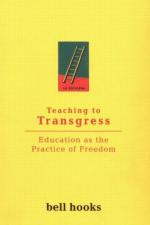
4. What is different about the way Hooks prints her pseudonym on the cover of the book than you would find on most books?
(a) It is circled.
(b) It takes up the entire cover.
(c) It consists of no capital letters.
(d) It is written in all capital letters.
5. Hooks said which of the following is most important for an effective educational process?
(a) Participation.
(b) Conflict.
(c) The text used.
(d) Professionalism.
Short Answer Questions
1. What did Hooks notice between white women?
2. Which of the following is a factor that Hooks said affected her career path?
3. In Chapter 4, what important tenet did Hooks repeat?
4. What did Hooks mention as a tool that cuts both ways with regard to progress?
5. Hooks said when creating and sustaining theories, what difference is important to consider?
Short Essay Questions
1. What description of her past did Hooks give in Chapter 5 that enabled the reader to understand her view of the patriarchal system?
2. Why did Hooks feel like her theoretical works were harshly criticized?
3. How did Hooks say it made her feel when she was not heard by her male colleagues?
4. According to Hooks, in what way did the concept of subject play a role?
5. How did Hooks describe dishonesty and how it can affect progress?
6. What were Hooks' views on nurturing independent thinking within the higher education environment?
7. What did Hooks say about self-actualization?
8. What was the overall theme of "Teaching to Transgress: Education as the Practice of Freedom" up to Chapter 6?
9. Hooks' first experience of racial integration was during her post-secondary school years. What was her perception of integration and education?
10. What did Hooks say about the psyches of women?
|
This section contains 862 words (approx. 3 pages at 300 words per page) |
|





