
 Print
Print Word
Word PDF
PDF

|
| Name: _________________________ | Period: ___________________ |
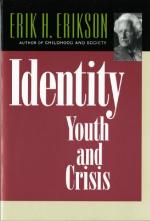
This quiz consists of 5 multiple choice and 5 short answer questions through Chapter 6, Toward Contemporary Issues, Youth.
Multiple Choice Questions
1. As noted in Chapter 2, how can false or inaccurate ego identity formations be corrected after being developed by parents in terms of group identity development?
(a) By immersion.
(b) Through psychotherapy.
(c) They cannot be corrected.
(d) By reworking associations.
2. Why was Erikson so impressed with Shaw?
(a) He could integrate the complex elements of life.
(b) He was very intelligent.
(c) He did not care what others thought.
(d) He developed a good theory of development.
3. What does the process of meeting fidelity do for Erikson's theory of youth identity?
(a) Denies it.
(b) Confirms it.
(c) Strengthens it.
(d) Confuses it.
4. In light of Erikson's view on identity development within communities, what must communities recognize in youth?
(a) Their rebellion.
(b) Their identity.
(c) Their lack of identity.
(d) Their energy.
5. What type of groups, as proposed by Erikson, often play on the various needs of youth?
(a) Parents.
(b) Community organizations.
(c) Political undergrounds.
(d) Schools.
Short Answer Questions
1. What does George Bernard Shaw despise?
2. What term does Erikson use to describe the fluctuation of ego strength and high growth potential?
3. What do youth recognize the need for during Erikson's stages of identity development?
4. In observing groups of people being reeducated by American civil servants, what reason does Erikson provide for why this group became frustrated and identity development?
5. That does introjection mean in terms of Erikson's stages of identity development for groups other than the majority?
|
This section contains 281 words (approx. 1 page at 300 words per page) |
|





