
 Print
Print Word
Word PDF
PDF

|
| Name: _________________________ | Period: ___________________ |
This quiz consists of 5 multiple choice and 5 short answer questions through Chapter 10.
Multiple Choice Questions
1. On what is there greater reliance to produce the necessary revenues?
(a) The slave-operated grain fields, mills, and shops.
(b) The slave-operated grain mills.
(c) The slave-operated grain fields.
(d) The slave-operated silver mines and urban craft industries.
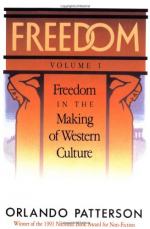
2. Patterson states that he does not mean for his book to be a study of the intellectual study of freedom, but the historical development of what?
(a) Greek culture and society.
(b) Freedom as a social value.
(c) Freedom as a social value in Greece.
(d) Freedom in Roman culture.
3. The financial welfare of the slaveholder is now becoming dependent on what?
(a) The intelligence of the slave.
(b) The physical attributes of the slave.
(c) The social class of the slave.
(d) The productivity of the slave.
4. Freedom is relative in that the more freedom one individual has, the ______ freedom another has.
(a) Less.
(b) Same.
(c) More.
(d) Better.
5. To what does this lead?
(a) The upper and middle class women commiserating and identifying with the slaves.
(b) All women commiserating and identifying with their friends and relatives.
(c) The lower and middle class women commiserating and identifying with slaves.
(d) The lower and upper class women commiserating and identifying with their children.
Short Answer Questions
1. What kind of freedom is this, on a national level?
2. Who does this economically benefit?
3. Why must one be aware of and concerned with the thoughts and opinions of the intellectuals?
4. The whole fabric of society exists around and is dependent on what?
5. What kind of revolution is the fourth revolution, marked by the formation of social and moral sciences based on rationality?
|
This section contains 317 words (approx. 2 pages at 300 words per page) |
|





