
 Print
Print Word
Word PDF
PDF

|
| Name: _________________________ | Period: ___________________ |
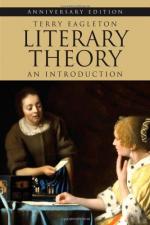
This quiz consists of 5 multiple choice and 5 short answer questions through Introduction: What is Literature?.
Multiple Choice Questions
1. During the 1960s, what kind of students began to enter higher education that broke down assumptions about literary studies?
(a) Students from supposedly "uncultivated" backgrounds.
(b) Students from supposedly "first-world" countries.
(c) Students from supposedly "third-world" countries.
(d) Students from supposedly "cultivated" backgrounds.
2. According to Eagleton, what is ironic about those who complain of the difficulty of literary theory?
(a) "That those who complain would not expect to understand a textbook of biology or chemical engineering."
(b) "That those who complain are often uncivilised and uneducated."
(c) "That those who complain would expect to understand a textbook of biology or chemical engineering."
(d) "That those who complain are often civilised and educated."
3. According to Eagleton, the approaches outlined in his book have implications where?
(a) Well beyond literature.
(b) Well beyond politics.
(c) Well beyond language.
(d) Well beyond feeling.
4. According to Eagleton, why did the Russian formalists NOT see a literary work as a vehicle for ideas, reflection of reality, or transcendental truth?
(a) Because they saw language as potentially empowering the masses.
(b) Because they saw language as a mode of speech for the wealthy.
(c) Because they saw language as words and not objects or feelings.
(d) Because they saw language as obtuse, vague, and ephemeral.
5. According to Eagleton, what kind of thought does literary education NOT encourage?
(a) Creative thought.
(b) Rational thought.
(c) Irrational thought.
(d) Analytical thought.
Short Answer Questions
1. For the economist Eagleton discusses, "those economists who dislike theory or claimed to get along better without it" were what?
2. The Russian formalists rejected what kind of doctrines that had influenced literary criticism?
3. Who silenced the Russian formalists, according to Eagleton?
4. What genre of writing does Eagleton provide that is an example of writing that is NOT considered to be literature?
5. According to Viktor Shklovsky, what novel was "the most typical novel in world literature" because it impeded its own story-line so that it never gets off the ground?
|
This section contains 361 words (approx. 2 pages at 300 words per page) |
|





