
 Print
Print Word
Word PDF
PDF

|
| Name: _________________________ | Period: ___________________ |
This test consists of 5 multiple choice questions, 5 short answer questions, and 10 short essay questions.
Multiple Choice Questions
1. What cow did Michael Pollan purchase and follow its life?
(a) #623.
(b) #254.
(c) #12.
(d) #534.
2. How many residents live in Brevig Mission?
(a) 276.
(b) 653.
(c) 982.
(d) 1,359.
3. On average, Americans eat the equivalent of how many entire animals in a lifetime?
(a) 21,000.
(b) 1,550.
(c) 14,000.
(d) 18,000.
4. What word from the text means of the nature of being a model?
(a) Articulate.
(b) Paradigmatic.
(c) Pragmatic.
(d) Antagonistic.
5. By what name does the author refer to the USDA inspector at Paradise Locker Meats?
(a) Doc.
(b) Frank.
(c) Jeb.
(d) Sal.
Short Answer Questions
1. At what university does Bernie Rollin work?
2. What is the leading cause of death in the U.S.?
3. The author claims that Bill, Paul, Nicolette, and Frank are the kind of people that the president should consult when selecting what?
4. What was Nicolette Niman's former profession?
5. What does the "H" stand for when naming viruses such as H1 and H3?
Short Essay Questions
1. What are the benefits and the detriments of the water-immersion system in poultry production?
2. The author asserts that the ethical relationship of farmers to farm animals is unique. How does he elaborate on this?
3. Discuss Bill Niman's history. What led him to establish Niman Ranch?
4. When and where was Niman Ranch established? What are the missions of the company?
5. Describe the different points in processing where contamination often occurs.
6. In what ways does Bruce Friedrich contest Nicolette Niman's transcript in the book?
7. Discuss the use of antibiotics in livestock. How much antibiotics are spent on livestock each year?
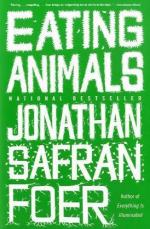
8. How is the concept of nature developed as a theme in Eating Animals?
9. Discuss the practices of branding, debudding, and castration. Are these practices regarded as cruel? Why or why not?
10. Why does the author admire Frank Reese?
|
This section contains 746 words (approx. 3 pages at 300 words per page) |
|





