
 Print
Print Word
Word PDF
PDF

|
| Name: _________________________ | Period: ___________________ |
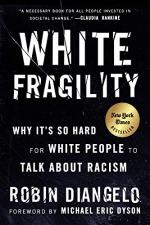
This quiz consists of 5 multiple choice and 5 short answer questions through Chapter 7.
Multiple Choice Questions
1. What does Diangelo write that color blind ideology start out with?
(a) Good intentions.
(b) Bad intentions.
(c) Both good and bad intentions.
(d) A small idea that got bigger and bigger over time.
2. What are companies expected to be able to do regarding affirmative action?
(a) Be able to articulate why they did not hire a qualified person of color.
(b) Be nice to people of color specifically.
(c) Be nice to their employees.
(d) Be able to employ enough people of color to make up half the company.
3. How does the good/bad binary affect race talk, according to Diangelo in Chapter 5?
(a) It makes it easy to talk to white people about racism.
(b) It makes it difficult to talk to people of color about racism.
(c) It makes it impossible to talk to white people about racism.
(d) It makes it pleasurable to talk to white people about racism.
4. What is field, as stated in Chapter 7?
(a) A open space in the prairies.
(b) An invitation to bring new ideas.
(c) The specific social context a person is in.
(d) The specific place a person is originally from.
5. What do white people tend to assume aboout people of color who apply to jobs or schools?
(a) People commonly believe that if a person of color applies for a position, he or she must be hired over a white person.
(b) People commonly believe that if a person of color applies for a position, he or she will be rejected.
(c) People assume whether they get in will be based on merit.
(d) They do not assume anything.
Short Answer Questions
1. What does Diangelo say about the state of Western society?
2. What does "white flight" refer to?
3. What is the general understanding of whiteness, as defined in Chapter 2?
4. What does color blindness exempt white people from?
5. What happens when disquilibrium occurs, as stated in Chapter 7?
|
This section contains 448 words (approx. 2 pages at 300 words per page) |
|





