
 Print
Print Word
Word PDF
PDF

|
| Name: _________________________ | Period: ___________________ |
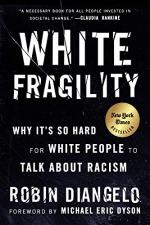
This quiz consists of 5 multiple choice and 5 short answer questions through Chapter 6.
Multiple Choice Questions
1. What was the name of Martin Luther King Jr.'s famous speech?
(a) I Have an Idea.
(b) I Had a Dream.
(c) I Had a Nightmare.
(d) I Was Thinking Last Night.
2. What group of people make up the majority who control the economy?
(a) White elite.
(b) Black elite.
(c) Working class whites.
(d) Asian elite.
3. What do white people tend to assume aboout people of color who apply to jobs or schools?
(a) People commonly believe that if a person of color applies for a position, he or she will be rejected.
(b) People assume whether they get in will be based on merit.
(c) They do not assume anything.
(d) People commonly believe that if a person of color applies for a position, he or she must be hired over a white person.
4. How does the good/bad binary affect race talk, according to Diangelo in Chapter 5?
(a) It makes it impossible to talk to white people about racism.
(b) It makes it easy to talk to white people about racism.
(c) It makes it pleasurable to talk to white people about racism.
(d) It makes it difficult to talk to people of color about racism.
5. Who does race have a hand in shaping?
(a) Everyone.
(b) People of color only.
(c) White people only.
(d) Race does not shape people.
Short Answer Questions
1. What does a person mean when they say they are colorblind?
2. With what common phrase do white people claim to value diversity?
3. When does racism occur?
4. What does Diangelo state is always present in a relationship between a white person and a person of color?
5. Where does Diangelo belong, as stated in Chapter 4?
|
This section contains 380 words (approx. 2 pages at 300 words per page) |
|





