
 Print
Print Word
Word PDF
PDF

|
| Name: _________________________ | Period: ___________________ |
This quiz consists of 5 multiple choice and 5 short answer questions through Chapter 5.
Multiple Choice Questions
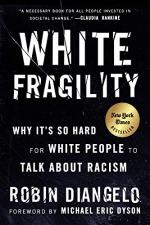
1. How does Diangelo define a white progressive?
(a) Any white person who thinks they are not racist.
(b) Any white person who marched in the sixties.
(c) Any white person who thinks they are racist.
(d) Any white person who does not see color.
2. What does aversive racism allow people to do, as stated in Chapter 3?
(a) It allows people of color to discriminate against white people.
(b) It allows people to enact in racism in ways that let them maintain a positive self-image.
(c) It allows people to enact in racism in ways that do not let them maintain a positive self-image.
(d) It allows white people to target certain ethnic groups in any way they please.
3. What professional fields do white people dominate in Western society?
(a) Music industry.
(b) Film industry.
(c) Virtually all traditional professional fields.
(d) Medical world.
4. What does racism need to be distinguished from in order to understand it, according to Diangelo?
(a) Prejudice and discrimination.
(b) Assumptions and bias.
(c) Good and evil.
(d) Love and hate.
5. Does Diangelo think racism has adapted over time?
(a) No.
(b) Yes.
(c) She does not mention time in relation to racism.
(d) She think it both has and has not.
Short Answer Questions
1. Why can white people not be trusted when it comes to perceptions of race and crime, according to Diangelo?
2. How do white people --typically older generations -- sometimes refer to the past?
3. What is the general understanding of whiteness, as defined in Chapter 2?
4. What is new racism?
5. What does Diangelo write that she does not have to worry about?
|
This section contains 394 words (approx. 2 pages at 300 words per page) |
|





