
 Print
Print Word
Word PDF
PDF

|
| Name: _________________________ | Period: ___________________ |
This quiz consists of 5 multiple choice and 5 short answer questions through Section 1: "One Art" lines 1-19.
Multiple Choice Questions
1. What does the second stanza suggest the "art" of losing consists of?
(a) Ignoring loss.
(b) Conquering loss.
(c) Grieving loss.
(d) Accepting loss.
2. Lines 4 and 6, ending in the words "fluster" and "master," exhibit what type of rhyme?
(a) Perfect rhyme.
(b) Internal rhyme.
(c) Eye rhyme.
(d) Slant rhyme.
3. In line 7, "Then practice losing farther, losing faster," rhythm is created through which devices?
(a) Cacophony, epizeuxis, and diazeugma.
(b) Parallelism, diacope, and consonance.
(c) Anaphora, assonance, and asyndeton.
(d) Alliteration, epistrophe, and antithesis.
4. How many stanzas does "One Art" have?
(a) 7.
(b) 8.
(c) 6.
(d) 9.
5. Who is the author of "One Art"?
(a) Audre Lourde.
(b) Lucille Clifton.
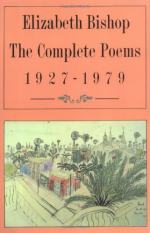
(c) Elizabeth Bishop.
(d) Sylvia Plath.
Short Answer Questions
1. What is a reasonable statement to make about the effect of the enjambment in lines 8 and 9, "places, and names, and where it was you meant/ to travel"?
2. Which technique is used in the speaker's claim to have lost "some realms I owned, two rivers, a continent" (line 14)?
3. How many refrains does "One Art" contain?
4. In the first stanza, what does the speaker suggest makes the loss of some things especially easy to accept?
5. What is the name of the metrical foot that appears at the end of lines 1 and 3 in most of the stanzas?
|
This section contains 292 words (approx. 1 page at 300 words per page) |
|





