
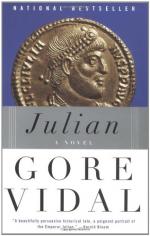
 Print
Print Word
Word PDF
PDF

|
| Name: _________________________ | Period: ___________________ |
This test consists of 15 multiple choice questions and 5 short answer questions.
Multiple Choice Questions
1. Although he is intrigued by the deities, Julian also believes in:
(a) The Virgin Mary.
(b) One God.
(c) The Way.
(d) The Prophet, Mohammed.
2. Julian believes that his fate is being foretold when he dreams about:
(a) Trees.
(b) Wolves.
(c) Eagles.
(d) Snakes.
3. Julian's first winter in Gaul is spent:
(a) Fighting an all-out war against the Visigoths.
(b) Negotiating with local warlords for food and supplies.
(c) Fighting minor skirmishes.
(d) Building roads, bridges and tunnels for the army.
4. Julian desires to use his authority as Augustus to influence the Romans to restore:
(a) The chapel to St. Mammas that he builds with his brother.
(b) The Hellenistic gods to a place of honor.
(c) The roads and bridges that he builds through Gaul.
(d) The observance of all Christian holidays.
5. After a disastrous famine, people blame:
(a) Gallus.
(b) Theophilus.
(c) Constantia.
(d) God.
6. When Julian learns that Eusebia is gravely ill:
(a) He makes no comment.
(b) He blames Constantius.
(c) He rushes to her bedside.
(d) He finds another mistress.
7. Within the span of a few months, all of the following events occur except:
(a) Constantius names Julian as Caesar.
(b) Macrina dies in childbirth.
(c) Julian is dispatched to Gaul.
(d) Julian marries Helena.
8. Gallus' wife, Constantia, eventually dies from:
(a) Childbirth.
(b) Fever.
(c) Suicide.
(d) Poison.
9. Julian describes all these aspects of the mysteries of Hellenism, except:
(a) Ritual sacrifice of a pig.
(b) Bathing a pig in the sea.
(c) Crossing a bridge on foot.
(d) Worshiping at the shrine of Aphrodite.
10. While in Gaul, during the actual fighting against the German invaders, Julian:
(a) Relies on signs and omens to determine the outcome.
(b) Joins his men at the front and demonstrates his courage.
(c) Rallies the local population to join his cause.
(d) Makes strategic decisions based on intelligence.
11. Constantius kills Gallus by:
(a) Drowning.
(b) Beheading.
(c) Stoning.
(d) Starvation.
12. The Heirophant of Greece is:
(a) The personification of the sun god on earth.
(b) The de facto mayor of Athens.
(c) The emperor's ambassador to Greece.
(d) The custodian of the mysteries of Eleusis.
13. As he gains military success, Julian begins to see Constantius as:
(a) Wise and knowledgeable.
(b) Weak and selfish.
(c) Conniving and cowardly.
(d) Determined and shrewd.
14. While the people of Gaul recover from the war between the Roman Empire and the Germans, Julian:
(a) Attempts to keep the people's taxes low.
(b) Enjoys the company of many beautiful women in Paris.
(c) Tries to convert the populace to Hellenism.
(d) Allows his men to plunder the cities and rich farmlands.
15. According to Julian's journal and memoirs:
(a) The people are afraid to say anything negative about the government.
(b) The people do not understand that he is trying to make their lives better.
(c) The people all love him and want to see him become emperor.
(d) The people are loyal to Constantius even though he is cruel and selfish.
Short Answer Questions
1. This person dies when Julian is 11.
2. In his quest for power and authority, Julian continues in section XI to:
3. Julian's relationship with his half brother, Gallus, is best described as:
4. Constantius' writes instructions to Julian, which includes all of the following except:
5. Libanius plans to title his publication about Julian:
|
This section contains 566 words (approx. 2 pages at 300 words per page) |
|





