
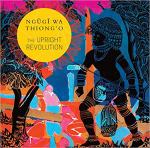
 Print
Print Word
Word PDF
PDF

|
| Name: _________________________ | Period: ___________________ |
This test consists of 5 multiple choice questions, 5 short answer questions, and 8 short essay questions.
Multiple Choice Questions
1. For how long do Arms and Legs debate which of them is better?
(a) Years.
(b) Days.
(c) Months.
(d) Weeks.
2. Arms brags that which part of them are superior to the Toes?
(a) Wrists.
(b) Fingers.
(c) Shoulders.
(d) Elbows.
3. What does Ears do during the contest?
(a) Keeps scores.
(b) Tells everyone to stay silent.
(c) Primes themselves to hear the slightest sound.
(d) Makes sure nobody aids Arms and Legs by instructing them.
4. What aspect of the hand is said to have been different than hands today?
(a) Humans did not have thumbs.
(b) Humans had only three fingers.
(c) The thumb was close to the fingers like the big toe.
(d) Humans had two thumbs.
5. What do the other body parts begin to do as a result of their envy of Legs and Arms?
(a) They shut down.
(b) They ignore legs and arms requests.
(c) They begin to plot against legs and arms.
(d) They create a body that does not need arms and legs.
Short Answer Questions
1. What phrase is used to describe what the other body parts no longer wanted to lend to Arms and Legs?
2. What body parts are described as being closer than other organs?
3. What is another creature humans are said to have been faster than at the start of the story?
4. What did Legs and Arms help the body do in the water?
5. Why do other body parts become "green with envy" with regard to Legs' and Arms' relationship?
Short Essay Questions
1. What are three animals humans were said to be faster than at the start of the story?
2. In what ways are Humans said to be "just like all the other four-limbed creatures" (1) at the start of the story?
3. What do legs and arms think of each other as and how do they work together at the start of the story?
4. Who decides there should be a contest and what solution does he come up with regarding what the contest will be?
5. How are each of the organs on "maximum alert" (19) during the contest?
6. What uses are Legs and Arms able to borrow from other organs like mouth, nose, and eyes?
7. What does Tongue do to create conflict between Legs and Arms?
8. Why do the other body parts begin to envy Legs and Arms and what do they do as a result?
|
This section contains 624 words (approx. 3 pages at 300 words per page) |
|





