
 Print
Print Word
Word PDF
PDF

|
| Name: _________________________ | Period: ___________________ |
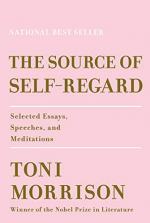
This quiz consists of 5 multiple choice and 5 short answer questions through Section 8: Part II--God’s Language, including the essays “The Source of Self-Regard” through “Invisible Ink: Reading the Writing and Writing the Reading”.
Multiple Choice Questions
1. In "The Site of Memory," Morrison remarks upon what tone common in slave narratives?
(a) Despair.
(b) Objectivity.
(c) Fury.
(d) Sarcasm.
2. In "God's Language," Morrison uses the word "ruminating" to describe what?
(a) The kind of paradise revealed in her books.
(b) Her contemplation of images.
(c) Her admiration for Black women.
(d) The prayers of her childhood friend.
3. Who is Hannah Peace?
(a) The inspiration for Sula.
(b) A character in Beloved.
(c) A literary scholar.
(d) A Black writer that Morrison admires.
4. According to "Harlem on My Mind," almost 28 years after the "Harlem" exhibit, the Guggenheim museum did what?
(a) Mounted an exhibition more concerned with Black politics than art.
(b) Devoted an entire exhibition to Romare Bearden.
(c) Focused on the question of what makes Black art Black.
(d) Excluded Black artists from a major retrospective exhibition.
5. In "Gertrude Stein and the Difference She Makes," what element does Morrison say is an aspect of the European American response to chaos lacking in the indigenous response?
(a) Pragmatism.
(b) Meditation.
(c) Disrespect.
(d) Wonder.
Short Answer Questions
1. In "Chinua Achebe," Morrison says that she learned what from Achebe?
2. In "The In "The Nobel Lecture in Literature," Morrison speculates about how much more knowledge we would have if scholarship was not held back by what?
3. What does the title "Academic Whispers" refer to?
4. Who is Margaret Garner?
5. In "God's Language," what does Morrison say gets more attention than paradise?
|
This section contains 375 words (approx. 2 pages at 300 words per page) |
|





