
 Print
Print Word
Word PDF
PDF

|
| Name: _________________________ | Period: ___________________ |
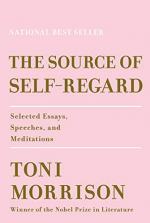
This quiz consists of 5 multiple choice and 5 short answer questions through Section 6: Part II--God’s Language, including the essays “James Baldwin Eulogy” through “The Writer Before the Page”.
Multiple Choice Questions
1. In "Black Matter(s)," what does Morrison say she means by "American Africanism"?
(a) The historic systemic oppression of Black Americans.
(b) A claim for expansion of the literary canon to incorporate Black writers.
(c) A white-American construct that defines "American" against a fabrication of Blackness.
(d) A Black literary movement that centers Africanness.
2. In "The Price of Wealth, the Cost of Care," what does Morrison blame for diminishing our desire to care for others in modern times?
(a) The rise of fascism in Western democracies.
(b) Widespread poverty in our own country.
(c) The rise of non-governmental organizations.
(d) Our fear of the movement of people across borders.
3. In "Black Matter(s)," Morrison says that immigration from the Old World to the New World is usually seen as what?
(a) A quest to spread European culture to the New World.
(b) A religious pilgimage.
(c) A desire to unite with the long history of indigenous peoples.
(d) A flight from oppression to freedom.
4. In "Black Matter(s)," what aspect of American slavery does Morrison claim makes its impact so long-lasting in American culture?
(a) The religion of slave-owners.
(b) Laws against teaching slaves to read and write.
(c) The breakup of slave families.
(d) The skin color of the slaves.
5. In "Tribute to Martin Luther King Jr.," what does Morrison say is MLK's legacy?
(a) He inspired young people to become civil rights leaders.
(b) He taught the world that religious faith must translate into social action.
(c) He made it a compelling and ordinary act to take personal responsibility for preventing social harm.
(d) He provided the motivation for both Black and white Americans to tear down racial barriers.
Short Answer Questions
1. Who was James Baldwin?
2. In "Grendel and His Mother," Morrison notes the significance of what characteristic of Grendel's mother?
3. In "God's Language," what does Morrison say seems more true the longer she writes?
4. In her "Sarah Lawrence Commencement Address," Morrison says that when you hate you become what?
5. In "Black Matter(s)," Morrison says that a key "absence" in writing about racism is the omission of its impact on whom?
|
This section contains 402 words (approx. 2 pages at 300 words per page) |
|





