
 Print
Print Word
Word PDF
PDF

|
| Name: _________________________ | Period: ___________________ |
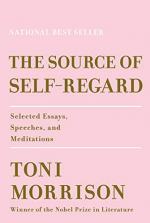
This quiz consists of 5 multiple choice and 5 short answer questions through Section 2: Part I--The Foreigner’s Home, including the essays “Moral Inhabitants” through “The Slavebody and the Blackbody”.
Multiple Choice Questions
1. Mass migration, according to Morrison, causes what to happen?
(a) Failure of the state.
(b) Fear of foreignness.
(c) Expansion of identity to include the "other."
(d) The surveillance state.
2. Morrison compares the Africa of the Western imagination to what legendary monster?
(a) The Sphinx.
(b) Medusa.
(c) Leviathan.
(d) Grendel.
3. Based on your reading of "Arts Advocacy," which statement would Morrison agree with?
(a) Art is a steadying force in society.
(b) Artists are not responsible for a dialogue with society.
(c) The existence of art in a society is precarious.
(d) Real artists are able to create regardless of their circumstances.
4. What question does Morrison say is at the center of of government?
(a) Control over history's narrative.
(b) Distribution of wealth.
(c) Cultural apartheid or integration.
(d) Creating peace and security.
5. In "The Slavebody and the Blackbody," Morrison says what about slavery?
(a) Writing about it can be cruel to modern African Americans.
(b) Most modern Americans do not have any historic ties to slavery.
(c) Slavery's consequences have been the same throughout history.
(d) It is an ancient practice that is not always tied to racism.
Short Answer Questions
1. In "Moral Inhabitants," Morrison says that the ability to make fine distinctions shows what?
2. In her "Sarah Lawrence Commencement Address," Morrison says that when you hate you become what?
3. In "Moral Inhabitants," what is the list of American leaders meant to demonstrate?
4. Morrison's reading of fiction about Africa written by non-African writers reminded her of what part of her childhood?
5. In her "Sarah Lawrence Commencement Address," what irony is Morrison's discussion of "Feed the Children" campaigns intended to illustrate?
|
This section contains 379 words (approx. 2 pages at 300 words per page) |
|





