
 Print
Print Word
Word PDF
PDF

|
| Name: _________________________ | Period: ___________________ |
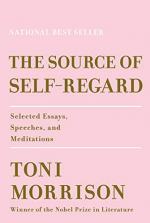
This quiz consists of 5 multiple choice and 5 short answer questions through Section 3: Part I--The Foreigner’s Home, including the essays “Harlem on My Mind: Contesting Memory--Meditation on Museums, Culture, and Integration” through “The Future of Time: Literature and Diminished Expectations”.
Multiple Choice Questions
1. What does Morrison say is a key reason for Western projections onto Africa?
(a) Africa's poverty.
(b) Western ignorance about Africa.
(c) Missionaries' quest to Christianize Africa.
(d) The persecution of indigenous Africans.
2. In "The Habit of Art," Morrison tells the anecdote about Antigone in Haiti to illustrate what point?
(a) Ancient Greek works are still relevant today.
(b) Art has real-world power.
(c) Acting in a play is therapeutic.
(d) Dictators try to crush artistic expression.
3. "Noblesse oblige" is a philosophy that urged the nobility to do what?
(a) Prevent strangers from entering their lands.
(b) Seize power from the church.
(c) Accumulate as much land as possible.
(d) Share their wealth.
4. In "The Habit of Art," Morrison praises the artist Toby Lewis for what?
(a) Disrupting the status quo with her provocative work.
(b) Placing art in public workplaces.
(c) Creating great religious art.
(d) Taking on the perspective of the "other."
5. In "Literature and Public Life," Morrison opens by joking that because she was once a student at the place she is now speaking, what might happen after her speech?
(a) She will have to defend her speech before an academic committee.
(b) The university will decide to take her degree away.
(c) She will be accused of plagiarizing the writer Toni Morrison.
(d) She will be charged tuition for the time she spent on campus giving the speech.
Short Answer Questions
1. In the story that opens "The Nobel Lecture in Literature," what do the children ask the old woman about?
2. The art show Morrison discusses in "Harlem on My Mind" had a catalog with a forward written by whom?
3. In her "Sarah Lawrence Commencement Address," Morrison says that she is willing to talk about typical graduation topics like the future, responsibility, and goodness, but not what?
4. In "The Future of Time," what does Morrison say it seems like "the future" means to people today?
5. In "The In "The Nobel Lecture in Literature," Morrison speculates about how much more knowledge we would have if scholarship was not held back by what?
|
This section contains 363 words (approx. 2 pages at 300 words per page) |
|





