
 Print
Print Word
Word PDF
PDF

|
| Name: _________________________ | Period: ___________________ |
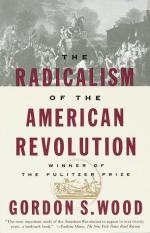
This quiz consists of 5 multiple choice and 5 short answer questions through Part 3, Chapter 18.
Multiple Choice Questions
1. Why was poverty considered a virtue for common colonial people?
(a) It kept them submissive.
(b) It kept them satisfied.
(c) It kept them subjected.
(d) It kept them industrious.
2. Who believed that each individual was responsible for his or her eternal salvation or damnation?
(a) Barton Stone.
(b) Lyman Beecher.
(c) Lorenzo Dow.
(d) Elias Smith.
3. Who must yield power for a government to be good?
(a) Men interested in politics.
(b) Wealthy men.
(c) Men who care about society.
(d) Disinterested men.
4. What supported the colonial southern plantations that made networks of influence unnecessary?
(a) Outside investors.
(b) Farming.
(c) Slavery.
(d) Family networks.
5. What was democracy considered in the 18th century?
(a) A present condition of American life.
(b) An impossible accomplishment to be dismissed.
(c) A utopian term or society's hope.
(d) A technical term of political theory.
Short Answer Questions
1. How could a colonial adolescent master a particular skill or learn a discipline?
2. What kind of colonial churches dominated the first third of the 18th century?
3. What was the highest level of knowledge of a trade in colonial America?
4. When did Americans begin to call for the boycotting of British goods?
5. How are people regarded in a hierarchical society?
|
This section contains 265 words (approx. 1 page at 300 words per page) |
|





