
 Print
Print Word
Word PDF
PDF

|
| Name: _________________________ | Period: ___________________ |
This test consists of 15 multiple choice questions and 5 short answer questions.
Multiple Choice Questions
1. What is the real purpose of the protagonist's visits to his father?
(a) Learning about his family's history.
(b) Urging his father to go into a retirement home.
(c) Taking care of his father's needs.
(d) Trying to reunite his father and mother.
2. How do the protagonist's friends and neighbors react when he appears in the kitchen of the Golden Palace?
(a) They cheer for him and the director has to cut and restart the scene.
(b) They are both proud of him and envious of him.
(c) They ignore him completely.
(d) They are angry that he is cooperating with outsiders.
3. What is the main problem with living on the floor that the protagonist lives on?
(a) It is a high floor and the elevator is always broken.
(b) It is the only floor that does not have its own bathroom and shower.
(c) It often floods because the shower pan on the floor above is cracked.
(d) It is the floor where all of the gang members live.
4. What is so special about Older Brother?
(a) He is the head of the most powerful Asian gang in Chinatown.
(b) He is the perfect blend of authenticity and assimilation.
(c) He uses his money to take care of everyone in Chinatown who is in need.
(d) He never changes anything about himself to please non-Asian audiences.
5. In "ACT II: INT. GOLDEN PALACE," how does the protagonist spoil the fun that the other men are having outside his room?
(a) He questions their dignity and authenticity.
(b) He asks them how it would matter if one of them got to play Kung Fu Guy.
(c) He tells them that he heard that the show is discontinuing the role of Kung Fu Guy.
(d) He reminds them that they do not matter to Black and White at all--they are generic and replaceable.
6. What does the protagonist think about telling Turner the truth about?
(a) His mixed feelings about the role he is playing.
(b) His education and his ability to speak English.
(c) His kung fu ability.
(d) His father's situation.
7. What is a cheongsam?
(a) A traditional Chinese instrument.
(b) A pork-filled dumpling.
(c) A traditional Chinese dress.
(d) A man who gossips too much.
8. Why did Ming-Chen Wu and Older Brother argue?
(a) Older Brother boasted that his kung fu was better than Ming-Chen Wu's.
(b) Ming-Chen Wu caught Older Brother gambling.
(c) Ming-Chen Wu asked Older Brother to train the protagonist in kung fu.
(d) Older Brother wanted to loan Ming-Chen Wu money.
9. In the beginning of "ACT III: ETHNIC RECURRING," what is the protagonist trying to accomplish with much of his dialogue?
(a) He is trying to expand his own role on the show.
(b) He is trying to flirt with Green.
(c) He is trying to defend his community.
(d) He is trying to figure out what the plot of the show is.
10. In "ACT II: INT. GOLDEN PALACE," why does the protagonist's father want to see him?
(a) The protagonist left a script in his father's room.
(b) He needs help moving his bed.
(c) He is hungry.
(d) The protagonist missed his last kung fu lesson.
11. Who says, on page 96, "I'm not a person, I'm a category"?
(a) Turner.
(b) The protagonist.
(c) Ming-Chen Wu.
(d) Green.
12. As the protagonist is trying to get the bickering detectives to focus, what piece of information does he accidentally reveal?
(a) Fatty Choy is in a gang.
(b) There is an underground casino in Chinatown.
(c) Ming Chen-Wu is his father.
(d) Older Brother is missing.
13. What does the abbreviation "INT." stand for in setting descriptions?
(a) Interior.
(b) International.
(c) Interjection.
(d) Introduction.
14. What motive do Turner and Green suggest for Older Brother's disappearance?
(a) His involvement in Fatty Choy's gambling operation might have made him a kidnapping target.
(b) The protagonist himself might have killed Older Brother out of jealousy.
(c) Another resident might have killed him to create more opportunities for other Asian men.
(d) He might have been killed during a turf war over the money laundering operation.
15. What are the majority of the protagonist's earliest memories of his mother centered around?
(a) Studying.
(b) Food.
(c) Her absence.
(d) Teasing.
Short Answer Questions
1. In "ACT II: INT. GOLDEN PALACE," what reason is given for Asian actors being kept in the background?
2. As the protagonist's father listens to the protagonist delivering his lines, why does he start to look disappointed?
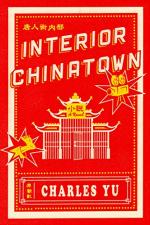
3. Who is the author of Interior Chinatown?
4. What are the seven main sections of Interior Chinatown called?
5. In "ACT II: INT. GOLDEN PALACE," who is standing by the protagonist's door when he arrives home after work?
|
This section contains 811 words (approx. 3 pages at 300 words per page) |
|





