
 Print
Print Word
Word PDF
PDF

|
| Name: _________________________ | Period: ___________________ |
This test consists of 5 multiple choice questions, 5 short answer questions, and 10 short essay questions.
Multiple Choice Questions
1. Where does the worst case of brutality in a brutal era take place?
(a) In Jerusalem.
(b) In the territory of Benjamin.
(c) In Budapest.
(d) In Canaan.
2. At what might critics scoff?
(a) The idea of studying God in all his glory.
(b) The idea of studying the Bible.
(c) The idea of understanding God in human terms.
(d) The idea of understanding humans in spiritual terms.
3. To what literary character does the author compare God?
(a) Don Quixote.
(b) Caesar.
(c) Juliette.
(d) Jo March.
4. How does God show his power to Egypt?
(a) He strikes the Eygyptians with ligntening bolts.
(b) He appears in a burning bush to Pharaoh.
(c) The bloody Passover ritual is performed, the Egyptians first-born sons die, and the Eyptians drown as they pursue the Israelites.
(d) He casts a spell on them.
5. What are the traits that come to the fore?
(a) Supreme power but peaceful.
(b) Benign and resilient.
(c) Fearsome and powerful.
(d) Ferocious, yet lacking in power.
Short Answer Questions
1. Why do the Christians move the prophets from the middle to the end?
2. Although his story, previously reserved to Jewish and Christian believers, is the bedrock of what civilization?
3. What is the unifying principle of the Tanakh?
4. What does God become when Pharaoh legislates that all Israelite boys be killed at birth?
5. By the time Exodus begins, what has happened to Abraham's descendants?
Short Essay Questions
1. In Gen. 4-11, how does God the Destroyer feel toward human beings?
2. What is the first prohibition after the flood?
3. How are the two personalities of God different?
4. By using foreign nations to punish his people, how is God opening the door to other nations?
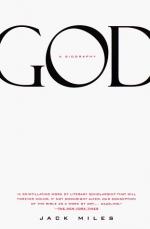
5. On what and whose precept is GOD: A BIOGRAPHY written?
6. What are two firsts mentioned near the beginning of the chapter?
7. How can one gain insight into the Western ideal of character without being Jewish or Christian?
8. What are three ways in which God is different from the gods of Greek mythology?
9. How does God deal with humans?
10. How does the frightful Yahweh act towards the man and the woman after they are punished and before they are expelled from the garden?
|
This section contains 599 words (approx. 2 pages at 300 words per page) |
|





