
 Print
Print Word
Word PDF
PDF

|
| Name: _________________________ | Period: ___________________ |
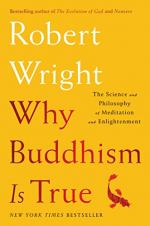
This quiz consists of 5 multiple choice and 5 short answer questions through Chapters 1-3.
Multiple Choice Questions
1. The author states that what feeling is linked to our modern environmental mismatch?
(a) Rage.
(b) Painful self-consciousness.
(c) Shame.
(d) Pride.
2. Which character in the movie referred to in the chapter entitled "Take the Red Pill" realizes that his life has actually been an extended hallucination?
(a) Altoo.
(b) Hagar.
(c) Morpheus.
(d) Neo.
3. What Rolling Stones song does the author say perfectly encapsulates the human condition from the Buddhist point of view?
(a) Gimme Shelter.
(b) Salt of the Earth.
(c) You Can't Always Get What You Want.
(d) I Can't Get No Satisfaction.
4. When ancient Buddhist writings mention the term sati, what does the word mean in English?
(a) Mindfulness.
(b) Tranquility.
(c) Peace.
(d) Stillness.
5. Though the author admits that there are paradoxes within Buddhism, he says that there are also paradoxes within which branch of science?
(a) Biology.
(b) Forensics.
(c) Geology.
(d) Physics.
Short Answer Questions
1. What is NOT a feeling listed by the author as one that fosters "wars and atrocities" (4)?
2. The author states that natural selection does not want people to be happy, but instead wants them to be what?
3. What is the one thing that the author says natural selection "cares about" (3)?
4. The author states that when the Buddhist techniques work, a person receives not just happiness, but what other element?
5. Whom does the author name as being on the lowest end of the spectrum in relation to how easy it will be for a person to pick up meditation?
|
This section contains 255 words (approx. 1 page at 300 words per page) |
|





