
 Print
Print Word
Word PDF
PDF

|
| Name: _________________________ | Period: ___________________ |
This quiz consists of 5 multiple choice and 5 short answer questions through Chapter 11: Hatari: Vinidogodogo and Chapter 12: Feminine Hygiene.
Multiple Choice Questions
1. Human trials of Albert Sabin's oral polio vaccine began in what year?
(a) 1963.
(b) 1970.
(c) 1957.
(d) 1944.
2. The WHO created the Declaration of Alma-Ata which sought to unite the world in a push to create healthy living conditions for everyone by what year?
(a) 2000.
(b) 2050.
(c) 2100.
(d) 1995.
3. The epidemics of what disease increased due to the Aswan High Dam inhibiting the natural fluctuations in water height?
(a) Malaria.
(b) Yellow fever.
(c) Swine Flu.
(d) Schistosomiasis.
4. In the beginning of Chapter 5: "Yambuku," the author describes a man in Yambuku who was treated for an illness like _____________.
(a) Malaria.
(b) Junin.
(c) Measles.
(d) Swine Flu.
5. Chapter 1: "Machupo," Karl Johnson found himself deathly ill with what disease?
(a) Yellow fever.
(b) Schistosomiasis.
(c) Bolivian hemorrhagic fever.
(d) Pneumocystis pneumonia.
Short Answer Questions
1. The Aswan High Dam is an embankment dam situated across what river?
2. What did Karl Johnson's team discover to be the culprit of the Bolivian disease in Chapter 1: "Machupo"?
3. Where did Uwe Brinkmann go after being released from a holding facility in Chapter 4?
4. A study in Africa related to TB showed its decrease was likely due to what?
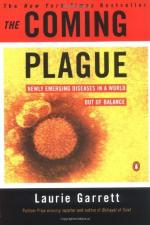
5. Who wrote the Preface to The Coming Plague: Newly Emerging Diseases in a World Out of Balance?
|
This section contains 226 words (approx. 1 page at 300 words per page) |
|





