
 Print
Print Word
Word PDF
PDF

|
| Name: _________________________ | Period: ___________________ |
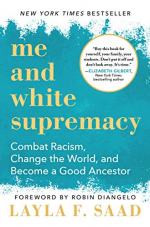
This quiz consists of 5 multiple choice and 5 short answer questions through Part 2, Week 3.
Multiple Choice Questions
1. The term “Herculean” carries what meaning?
(a) Requiring great intelligence.
(b) Requiring great strength.
(c) Requiring great finesse.
(d) Requiring great looks.
2. What meaning does the term “white fragility” carry?
(a) Breakability of bones in white people.
(b) Tolerance of discussions of race by white people.
(c) Enthusiasm for discussions of race by white people.
(d) Intolerance of discussions of race by white people.
3. The term “white silence” carries what meaning in the book?
(a) Refusal to talk about racism to white people.
(b) Refusal to talk about racism with white people.
(c) Refusal to talk about racism by white people.
(d) Refusal to talk about racism around white people.
4. Which of the following does Saad include among the purposes of the work outlined in the book?
(a) Getting stuck.
(b) Being celebrated.
(c) Seeing truth.
(d) Feeling shame.
5. In the book, the term “benign” carries what meaning?
(a) Pleasant and agreeable.
(b) None of these.
(c) Good and helpful.
(d) Unharmful and innocent .
Short Answer Questions
1. Saad defines racism as which of the following?
2. The term “white apathy” carries what meaning in the book?
3. The term “gaslighting” carries what meaning?
4. Saad notes that Black women are often either superhumanized or dehumanized. The note offers an example of which of the following?
5. The term “antiracist” carries what meaning?
|
This section contains 306 words (approx. 2 pages at 300 words per page) |
|





