
 Print
Print Word
Word PDF
PDF

|
| Name: _________________________ | Period: ___________________ |
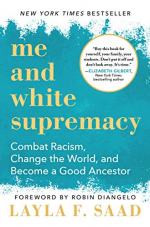
This quiz consists of 5 multiple choice and 5 short answer questions through Part 2, Week 1.
Multiple Choice Questions
1. The term “white silence” carries what meaning in the book?
(a) Refusal to talk about racism by white people.
(b) Refusal to talk about racism to white people.
(c) Refusal to talk about racism around white people.
(d) Refusal to talk about racism with white people.
2. Saad cites which of the following questions as being asked in tone policing herself?
(a) Am I coming across as too happy
(b) Am I coming across as too sad?
(c) Am I coming across as too angry?
(d) Am I coming across as too beautiful?
3. Which of the following is a likely manifestation of white fragility?
(a) Calling in outside authorities to maintain conversations about race and racism.
(b) Calling out outside authorities to stop conversations about race and racism.
(c) Calling in outside authorities to stop conversations about fragility and breakability.
(d) Calling in outside authorities to stop conversations about race and racism.
4. What does Saad list as her own reasons to continue the work outlined in the book?
(a) Commitment to overthrowing British society.
(b) Commitment to finding a good time.
(c) Commitment to truth, justice, and the American way.
(d) Commitment to love, truth, and being a good ancestor.
5. How many examples of white privilege does McIntosh articulate?
(a) 50.
(b) 5.
(c) 10
(d) 20..
Short Answer Questions
1. According to Freeman (54), how much of the human genome bears in on what is commonly called race?
2. The phrase “people with white privilege” (70) offers an example of which of the following?
3. The term “postracial” has what meaning?
4. Saad claims residence in which country?
5. The phrase “therefore deserve to dominate over” (87) offers an example of which of the following?
|
This section contains 282 words (approx. 1 page at 300 words per page) |
|





