
 Print
Print Word
Word PDF
PDF

|
| Name: _________________________ | Period: ___________________ |
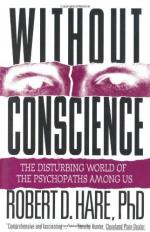
This quiz consists of 5 multiple choice and 5 short answer questions through Chapter 3, The Profile: Feelings and Relationships , pg 33-56.
Multiple Choice Questions
1. How many psychopaths are estimated to be in North America?
(a) One million.
(b) Two hundred thousand.
(c) One hundred thousand.
(d) Two million.
2. What does the author advise readers not to do with his book?
(a) Diagnose themselves or others.
(b) Rely upon it too heavily.
(c) Share it with friends.
(d) Use it to seek professional help.
3. What was incongruous about the red button in the psychologist's office in British Columbia Penitentiary?
(a) You could push it, but it indicated weakness on your part.
(b) You could push it in an emergency, but it did not work.
(c) You could push it in an emergency but not expect help.
(d) It was designed to simulate a real call button.
4. What question did Joe McGinniss wrestle with during his relationship with Jeffrey MacDonald?
(a) How could I have missed all the signs?
(b) How could I have understood him?
(c) How could I have misunderstood him?
(d) How could I have liked him?
5. Why is it important for parole boards to understand psychopathy?
(a) Most criminals are psychopathic.
(b) Psychopaths will eventually kill someone.
(c) All psychopaths will lie at parole hearings.
(d) Psychopathy is a strong predictor of recidivism.
Short Answer Questions
1. Why are most studies of psychopathy done in prisons?
2. What programs administer treatment if the psychopath is judged to be crazy?
3. What question did Helen and Steve ask themselves about their daughter Alice?
4. What prerequisite for love does a psychopath lack?
5. What was the first thing the author noticed about Ray when he met him?
|
This section contains 306 words (approx. 2 pages at 300 words per page) |
|





