
 Print
Print Word
Word PDF
PDF

|
| Name: _________________________ | Period: ___________________ |
This quiz consists of 5 multiple choice and 5 short answer questions through Chapter 8, A Word about Color.
Multiple Choice Questions
1. Which of the following is true, according to historical evidence?
(a) Written word predate spoken word.
(b) Pictures and spoken word developed simultaneously.
(c) Pictures predate written word.
(d) Written word predates pictures.
2. What transition offers no logical relationship between panels?
(a) Scene-to-scene
(b) Non-sequitur
(c) Subject-to-subject
(d) Action-to-action
3. What additional early examples of comics does the author mention but NOT cover?
(a) Greek painting
(b) Trajan's column
(c) Japanese scrolls
(d) All of the above
4. What is another word for motion lines?
(a) Curlicues
(b) Zip-buttons
(c) Swoosh signs
(d) Zip-ribbons
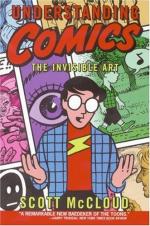
5. Who is the author of the book?
(a) Will Eisner
(b) Scott McCloud
(c) Rudolphe Töpffer
(d) Stan Lee
Short Answer Questions
1. Which artist was the first to depict motion by using a single line?
2. Which of the following is NOT listed as a flat-color master?
3. Whose uneven lines pantomimed the inner struggles of modern life?
4. Words and pictures have historically been thought of as base or simplistic. As a result of this mindset, current works of words and pictures have been base and simplistic. This is an example of what psychological phenomenon?
5. What step determines whether the art will be a book, a sculpture or a song?
|
This section contains 205 words (approx. 1 page at 300 words per page) |
|





