
 Print
Print Word
Word PDF
PDF

|
| Name: _________________________ | Period: ___________________ |
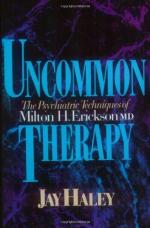
This quiz consists of 5 multiple choice and 5 short answer questions through Chapter 4, Character Revision of the Young Adult.
Multiple Choice Questions
1. In most of the examples referred to in Chapter 3, success in dating leads not only into marriage, but also into ____.
(a) Parenting.
(b) Life.
(c) Divorce.
(d) Career.
2. Where additional education is needed, Erickson recommends it; for instance, _________ can educate girls whose mothers or other older women did not properly train in make up or fashion.
(a) Aunts or cousins.
(b) Sisters and cousins.
(c) Therapists.
(d) Professional beauty assistants.
3. Under which heading of Chapter 1 is it stated that Erickson emphasized both the autonomy and togetherness of family members?
(a) "Awakening and Disengagement".
(b) "Avoiding Self-Exploration".
(c) "Encouraging Resistance".
(d) "Emphasizing the Positive".
4. The transition from being a child into being an adult involves ______ of the relational patterns between family members.
(a) Dismissal.
(b) Removal.
(c) Manipulation.
(d) Rearrangement.
5. Milton Erickson came from the American Midwest and received the majority of his education and preliminary work experience in Wisconsin and _____.
(a) Ohio.
(b) Colorado.
(c) Wisconsin.
(d) Portland.
Short Answer Questions
1. Haley states in Chapter 2, there is a need for the ______ to make a major adjustment towards the relationship of another family member but also to another family.
2. After other deep work is done and Harold has some very enjoyable experiences with women he does what of his own accord?
3. Under which heading does Haley address the final stages of life?
4. When children have left home and can no longer "be used to ___________," the parents are often confronted with each other in a different way.
5. Erickson does not tell Harold there is anything wrong with _________; he tells Harold that he wants to put Harold into a position to be open to changing or keeping his ideas about himself.
|
This section contains 308 words (approx. 2 pages at 300 words per page) |
|





