
 Print
Print Word
Word PDF
PDF

|
| Name: _________________________ | Period: ___________________ |
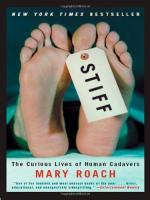
This quiz consists of 5 multiple choice and 5 short answer questions through Chapter 8, How to Know if You're Dead.
Multiple Choice Questions
1. What does the intensive care unit (ICU) staff do for H?
(a) Give the body nutrition to feed its tissues.
(b) Bring her back to life.
(c) Keep her body alive.
(d) Begin to remove her organs.
2. How does Mary Roach characterize the second stage of decay in a cadaver?
(a) Skin sloughing off, with maggots beneath the surface.
(b) Bloat with large numbers of maggots.
(c) Liquidation of internal organs.
(d) Persistence of putrescent odor.
3. What did Thomas Holmes perfect?
(a) Embalming.
(b) Revitalization.
(c) Mortuary science.
(d) Resurrection.
4. How were surgeons promoted before the 1800s?
(a) By lottery.
(b) By nepotism.
(c) By merit.
(d) By seniority.
5. What do the students call the viscous liquid that comes from the cadaver's mouth?
(a) Purge.
(b) Vomit.
(c) Liquid.
(d) Overflow.
Short Answer Questions
1. What does surgeon Marliena Marignani find difficult to work with?
2. What have medical schools done in the past decade, according to Mary Roach?
3. When did injury analysis begin?
4. Which event happened first, in Shanahan's explanation of TWA Flight 800?
5. Why is the British practice for avoiding consent impractical, according to Mary Roach?
|
This section contains 260 words (approx. 1 page at 300 words per page) |
|





