
 Print
Print Word
Word PDF
PDF

|
| Name: _________________________ | Period: ___________________ |
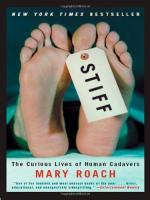
This quiz consists of 5 multiple choice and 5 short answer questions through Chapter 4, Dead Man Driving.
Multiple Choice Questions
1. What was Mary Roach touched by at the event at UCSF?
(a) A cadaver's apparent patience.
(b) A tribute to a cadaver.
(c) A cadaver's family's satisfaction.
(d) A demonstration on a cadaver.
2. How were Civil War soldiers treated when they died, in Mary Roach's account?
(a) They were shipped home and buried.
(b) They were mummified and collected.
(c) They were buried where they fell.
(d) They were buried in Arlington.
3. What has resulted from car safety studies with cadavers, according to Mary Roach?
(a) Safer doors.
(b) Roll bars.
(c) Safer windshields.
(d) Safer tires.
4. Who was the 'father of anatomy'?
(a) Asclepius.
(b) Herophilus.
(c) Sarpedon.
(d) Apollo.
5. What difficulty occurs when patients insist on experienced doctors?
(a) Learning the newest techniques.
(b) Finding patients or cadavers to train on.
(c) Keeping up with medical science.
(d) Getting training for surgeons.
Short Answer Questions
1. The University of Tennessee Medical Center is the home to the only facility that does what?
2. How do researchers in Britain bypass familial consent?
3. What does UM006 wear for the study?
4. What did Thomas Holmes perfect?
5. When are apes more useful than cadavers in studies?
|
This section contains 246 words (approx. 1 page at 300 words per page) |
|





