
 Print
Print Word
Word PDF
PDF

|
| Name: _________________________ | Period: ___________________ |
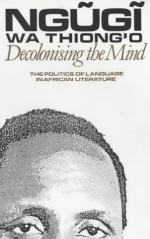
This quiz consists of 5 multiple choice and 5 short answer questions through Chapter 4 (Parts I-IV): "The Quest for Relevance" .
Multiple Choice Questions
1. What was the first school that Ngũgĩ wa Thiong’o attended?
(a) Khoekhoe.
(b) Luganda.
(c) Northern Ndebele.
(d) Kamaandura.
2. According to the author in Chapter 1, Part I, as an effect of colonization, Africa was defined in the languages of Europe. What three languages does he describe?
(a) English, French, and Portuguese.
(b) English, French, and Spanish.
(c) French, Spanish, and German.
(d) Dutch, French, and Portuguese.
3. Where did Dr. Kimanĩ Gecaũ flee to in 1982?
(a) Zimbabwe.
(b) Cameroon.
(c) Algeria.
(d) The Democratic Republic of Congo.
4. When did Gakaara wa Wanjaũ earn the Noma Award for his secret diary he kept while in political detention?
(a) 1989.
(b) 1991.
(c) 1984.
(d) 1978.
5. What character in Caitaani mũtharaba-Inĩ moves in a matatu taxi from Nairobi to Ilmorog?
(a) Warĩĩnga.
(b) Munira.
(c) Abdulla.
(d) Nyakinyua.
Short Answer Questions
1. Where was the author working as the Chairman of the Literature Department when he was arrested?
2. How many years of involvement had Ngũgĩ wa Thiong’o spent writing literature in Englis when the author began writing in Gĩkũyũ?
3. From whom does the author borrow the phrase "empty space" in Chapter 2, Part III (37)?
4. The author states in Chapter 1, Part IX that "to the comprador-ruling regimes, their real enemy is" what (30)?
5. In Ngaahika Ndeenda, Wangeci's monologue describes the Olengurueni women who were driven from their lands around where?
|
This section contains 253 words (approx. 1 page at 300 words per page) |
|





