 Print
Print Word
Word PDF
PDF|
This section contains 5,957 words (approx. 20 pages at 300 words per page) |

|
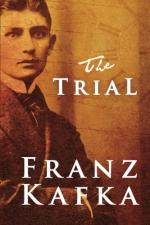
by Franz Kafka
Franz Kafka (1883-1924) was born into a German-speaking Jewish family in Prague, capital of the province of Bohemia, which was located in the western part of the future Czechoslovakia. Bohemia was then part of the Austro-Hungarian empire. Educated in an uppermiddle- class high school in which German was the principal language, Kafka obtained his law degree from Prague University in 1906. He found a job as legal advisor to a semi-public employee compensation agency, the Workers Accident Insurance Company for the Kingdom of Bohemia, where he had a successful career. Always interested in writing (much to the disappointment of his father, a practical-minded and dominating businessman), Kafka began to explore Czech and Yiddish as well as German literature. He became fascinated by the Jewish culture that his assimilated family had tended to ignore. In 1902 he befriended Max Brod, who would play an important role...
|
This section contains 5,957 words (approx. 20 pages at 300 words per page) |
|