Taxonomist
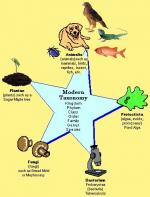
Taxonomy, or systematics, is the study of the kinds of organisms and their evolutionary history and relationships. Plant taxonomists collect and study groups of plants, focusing on the ways species arise, relationships among them, and selective forces that have molded their characteristics. To understand patterns of variation and relationships among plants, taxonomists study plants in nature, museums, laboratories, greenhouses, and experimental gardens.
Taxonomists identify, name, and classify organisms. They explore areas to collect, identify, and press representatives of every plant species, in orderto record biodiversity before the species are lost to extinction forever. Some explorations lead to conservation efforts or to the discovery of new species, an exciting experience that presents the taxonomist with the opportunity to name and publish a description of the newly discovered species. Basic to these tasks is the challenge of developing a classification for the myriad forms of life, based on differences and similarities such as form, chromosome number, behavior, molecular structure (especially deoxyribonucleic acid [DNA] sequences), and biochemical pathways. Recent advances in cladistics have made new gains in understanding how the world's plant species are related. Cladistics is a field in which taxonomists compare the most evolutionarily relevant traits among various related organisms in addition to the most obvious ones, using computer programs.
Taxonomists may be found working at universities, herbaria and museums, government agencies, conservation organizations, industry, and botanical gardens. Universities hire taxonomists as professors to teach and conduct research. In herbaria and museums with large plant collections, taxonomists maintain these collections, add to them, and conduct research on them. Federal and state agencies employ taxonomists in many fields, from public health and agriculture to wildlife management and forestry. Taxonomists also help prepare environmental impact statements and work with conservation and natural heritage offices. Industries that employ taxono-mists include agricultural processors, pharmaceutical firms, oil companies, and commercial suppliers of plants and seeds. Most jobs in government and industry are more taxonomic and ecological than evolutionary in nature. In general, availability of these jobs depends on the training and experience of the applicant. The higher the level of preparation, the greater the responsibility and independence the job will provide.
The typical plant taxonomist will major in botany or biology with supporting work in other sciences and math. After graduating from college, the student may begin graduate training immediately to earn a M.S. or Ph.D., or work as a research assistant at a university, herbarium, or other opportunity for a year or more. Working out of doors can be very exciting and rewarding for the adventurous. Assisting an established researcher in a herbarium, laboratory, or greenhouse can be fulfilling as one learns by working with the scientist. University teaching and research offers a very stimulating mix of experiences and sometimes administrative posts.
In 1999, salaries for taxonomists ranged from $40,000 to over $80,000. Persons interested in taxonomy follow their own interests in plants, earning satisfaction from doing interesting and worthwhile work.
Curator of an Herbarium; Taxonomic Keys; Taxonomy.
Bibliography
Anderson, G. J., and J. A. Slater. Careers in Biological Systematics. Laramie, WY: American Society of Plant Taxonomists, 1986.
Berg, L., M. Albertsen, H. Bedell, L. Debonte, J. Mullins, B. Saigo, R. Saigo, and W. Stern. Careers in Botany. Columbus, OH: Botanical Society of America, 1988.
This is the complete article, containing 533 words
(approx. 2 pages at 300 words per page).