 Print
Print Word
Word PDF
PDF|
This section contains 6,750 words (approx. 23 pages at 300 words per page) |

|
by Angela Carter
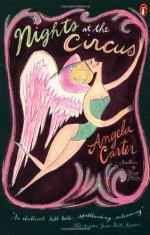
Nights at the Circus is the eighth of nine novels written by Angela Carter (1940- 92) before she died of cancer at the age of 51, in her literary prime. Raised in Yorkshire and London by middle-class parents, Carter began writing in the 1960s, publishing her first novel while still an undergraduate at Bristol University. After her initial successes, Carter moved to Japan from 1969 to 1972, a period she cites as extremely influential on her later work. In Japan she gained a new sense of what it meant to be a woman, and the experience radicalized her. Carters fiction is complex, densely allusive, sexually explicit, frequently derisive, and always subversive. Although it makes much use of themes and images from myth and fairy tales, she defined myth as consolatory nonsense, declaring herself to be in the demythologizing business (Carter in Peach...
|
This section contains 6,750 words (approx. 23 pages at 300 words per page) |
|