 Print
Print Word
Word PDF
PDF|
This section contains 4,099 words (approx. 14 pages at 300 words per page) |

|
by Richard Rodriguez
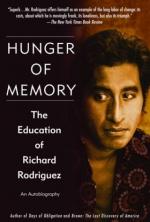
Richard Rodriguez was born on July 31, 1944, to Mexican immigrants Leopoldo and Victoria Rodriguez. In spite of the difficulties he faced as a Spanish-speaking child in the United States, Rodriguez excelled in school and eventually earned a Ph.D. in English literature. In 1976, rather than accept one of many job offers from prestigious universities, Rodriguez postponed a career as a professor. Although confident in the quality of his work, he could not quiet the suspicion that universities sought him primarily because he was a member of an ethnic minority. Rodriguez spent the next six years writing his autobiography, Hunger of Memory.
Events in History at the Time of the Autobiography
The postwar Mexican American community. Like many other segments of American society, Mexican American culture experienced numerous changes as a result of World War II. The drafting of an enormous segment of...
|
This section contains 4,099 words (approx. 14 pages at 300 words per page) |
|