 Print
Print Word
Word PDF
PDF|
This section contains 3,713 words (approx. 13 pages at 300 words per page) |

|
by Aldous Huxley
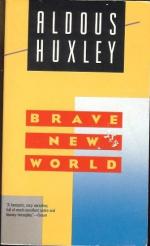
Aldous Huxley was born in 1894 into one of England's most distinguished intellectual families. His grandfather, Thomas Henry Huxley, was a brilliant biologist nicknamed "Darwin's bulldog" for his staunch support of the theory of evolution during the Origin of Species debates in the mid-Victorian period. His father, Leonard Huxley, was a respected editor and essayist, and his mother, Julia Frances Arnold, was the niece of the poet and literary critic Matthew Arnold as well as granddaughter of Dr. Thomas Arnold, a pioneer of English public education. Huxley's brother, Julian, was a noted geneticist. A product of the combined Huxley and Arnold strains, Aldous Huxley possessed a heritage that was literary as well as scientific. Although this marriage of ideas is found in many of Huxley's writings, it is especially evident in Brave New World, the novel for which he is most famous...
|
This section contains 3,713 words (approx. 13 pages at 300 words per page) |
|