Forgot your password?  


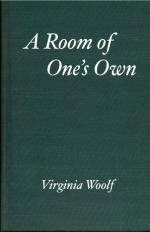
A Room of One's Own - Virginia Woolf - 1929 | Research & Encyclopedia Articles

Print-Friendly   Order the PDF version   Order the RTF version
About 33 pages (9,755 words)
A Room of One's Own Summary

Purchase our A Room of One's Own - Virginia Woolf - 1929


A Room of One's Own - Virginia Woolf - 1929

Introduction

In A Room of One's Own (1929), Woolf asserts that some of the most interesting and intellectual characters in literature have been women. However, off the printed page, women have primarily played second-class roles, kept in place by men determined to dominate them. Women have long been denied access to education and have historically been denied the personal rights and leisure time that are the precondition of creative writing. Addressing her audience in 1929, she notes that authors such as Jane Austen and the Bronte sisters have made important contributions to literature, but much remains to be done. Woolf famously insists that creative works require freedom, both financial and intellectual; a woman must have independent means (at least five hundred pounds a year, a large sum at the time) and a room of her own. At the time this essay was published, Woolf's message was unprecedented and radical.

A Room of One's Own is based on two lectures that Virginia Woolf presented in 1928 at Newnham and Girton colleges, women's colleges at Cambridge University. She expanded the lectures and published them together as one long essay in 1929.

This page contains 201 words.

Purchase our A Room of One's Own - Virginia Woolf - 1929 article A Room of One's Own - Virginia Woolf - 1929 article
Read the rest of this article.
This article contains 9,755 words (approx. 33 pages at 300 words per page).
Ask any question on A Room of One's Own and get it answered FAST!
Answer questions in BookRags Q&A and earn points toward
discounted or even FREE Study Guides and other BookRags products!
Learn more about BookRags Q&A
Copyrights
A Room of One's Own - Virginia Woolf - 1929 from Literary Themes: Race and Prejudice. ©2008 Thomson Gale, a part of the Thomson Corporation. All rights reserved.