Stalin, Joseph
HEAD OF STATE OF THE SOVIET UNION1879–1953
Joseph Vissarionovich Dzhugashvili was born December 21, 1879, to a peasant family in Georgia. He joined the Russian Social Democratic ...
Read more
The Soviet statesman Joseph Stalin (1879-1953) was the supreme ruler of the Soviet Union and the leader of world communism for almost 30 years.Under Joseph Stalin the Soviet Union greatly enlarged its...
Read more
Joseph Stalin was the dictator of the Soviet Union from 1929 to 1953. During these years he epitomized the totalitarian leader, transforming Soviet society according to his personal wishes and using t...
Read more
Stalin's rise to absolute power began to progress steadily after the death of Lenin in 1924. His most significant methods can be classified as those of his administration, his purges of the party, the...
Read more
The Twentieth century set the stage for many conflicts and revolutions around the world. These conflicts turned into war and these revolutions turned into dictatorial rules that caused more conflicts ...
Read more
The year was 1924 and the USSR was suffering from great economic and political corruption. Vladimir Lenin, the leader of the Bolsheviks and a key revolutionary figure in Russian history, had passed aw...
Read more
Joseph Vissarionovich Djugashvili alias Stalin was the successor of Lenin. After Lenin's death Stalin got rid of rivals such as Trotsky and was able to become the leader of the USSR. Stalin believed t...
Read more
During the 1930s, the government in the U.S.S.R felt forced to change the country to be less backward, as many rulers had felt compelled to do since the reign of Peter the Great. The U.S.S.R. was a l...
Read more
In economic terms, the results of Stalin's collectivisation were disastrous; Stalin achieved little in the way of economic stability through the policy, destroying any alliance between town and countr...
Read more
Stalin transformed the Soviet Union from a backward country into a strong modern state. But the price of this was misery for the soviet people. How accurate was this view of Stalin's rule between 1928...
Read more
Joseph Stalin and Adolf Hitler these names are known for causing fear and paranoia in people of their time. These two men have forever changed the history of the world. Josef Stalin or Uncle Joe Stal...
Read more
Benito Mussolini of Italy and Joseph Stalin of the U.S.S.R. cast long shadows across the landscape of the twentieth century. They came to power with the support of their people, but they lost the sup...
Read more
While Hitler's Fascism established the superiority of the German race and the need to expand as wanted by God, the Communist Manifesto on which Stalin's regime was based called on the proletariat to u...
Read more
Russia's victory in World War Two did prove that there were Russian strengths, such as those of the improvised, command economy and the new adaptive method of leadership that could counter balance th...
Read more
Joseph Stalin, the son of a Georgian cobbler, worked his way from a poor peasant to the ruler of the largest nation in the world. His merits are numerous: helping overthrow the Tsarist government, win...
Read more
The rise of governments within governments is not an uncommon happening throughout the history of the world. However, there must always be a central power behind the uprising of a new government. I...
Read more
By some universal coincidence, two of the most profoundly evil, yet eminent, leaders ever known to history led almost "parallel" lives during the same time period. These two figures are Adolf Hitler...
Read more
Two of the most powerful and feared personalities of the twentieth century were Joseph Stalin and Benito Mussolini. These men transformed their nations into great and powerful countries. But during th...
Read more
Adolf Hitler was born in 1889 on the border between Austria and Germany. His father, Alois Schickelgruber Hitler, was a customs official and his mother, Klara Poelzl, a peasant girl. As a child, Hitl...
Read more
A true man of terror, Joseph Stalin will be remembered in both Russian and world history as a tyrannical puppet master with a gun. Stalin was renowned for making people do what he wanted, while ha...
Read more
Stalin emerged as Lenin's successor for many different reasons. Stalin was a vicious man with many strengths which helped him gain leadership. He was the quiet one in the Bolshevik party, but appeared...
Read more
Stalin held on to power in the Soviet Union from 1928-53 in several different ways. Stalin was a strong and determined man who did not let anything deter him from his path . He was the leader of a mod...
Read more
Stalin's iron grip, holding the Soviet Union under the gun for over 35 years, nearly crumbled the entire nation despite its economic developments. How could this censurable tyrant remain in power for...
Read more
Joseph Stalin and Mikhail Gorbachev were both very brilliant and strong rulers of the Soviet Union. However the way they ruled were both very alike and very different. Stalin ruled for a period of t...
Read more
The Hidden Good
"The evil that men do lives after them; the good is (often buried) with their bones," stated the famous William Shakespeare through Antony in his play, Julius Caesar. More often th...
Read more
Joseph Stalin arose from political obscurity to control the USSR by 1939 and become one of history's most notorious leaders. Stalin was able to control the Soviet party, the rural and urban workers, a...
Read more
The rise to power
Lenin's short reign of one of the largest countries in the world was followed by Stalin's which lasted many decades. Although the reign of Stalin and Lenin showed some similarities,...
Read more
Stalin's reign cannot be considered a success as his policies of collectivisation and industrialization did not increase the standard of living of the Soviet people. When Stalin became leader of the S...
Read more
Why did Stalin rather than Trotsky emerge as the leader of the USSR in 1929? Trotsky was the one who had planned the November revolution, and it was he who organized the Red Army and led them to war a...
Read more
After Lenin's death in 1924, there was a power struggle for the control of the USSR until Stalin emerged as its leader in 1929. Why did Stalin rather than Trotsky, who had led the army during the Russ...
Read more
The word tyrant can be defined in many different ways. Is a tyrant merely a man who rules with indecency and no restrictions? Or can it be something more? The well known tyrants seem not to have much ...
Read more
JOSEPH STALIN
On December 21, 1879 Iosif Vissarionovich Dzhugashvili was born in Gori, Georgia, the eastern edge of the Black Sea in the Caucasus Mountains. He was called Soso, which is Georgean fo...
Read more
Russian leader Josef Stalin did many things to maintain power. He was a ruthless governor and went to extreme extents to make sure that he remained in power.
First of all, Stalin realised that there ...
Read more
An effective leadership is reliant on the relationship one develops with his followers. This relationship often determines the success of a leader's policies. Stalin was a leader who sought to destroy...
Read more
Joseph Stalin was born in a small town called Gori, in Georgia on December 21, 1879. His recent death, on the date of March 5, 1953 in Moscow comes as a great relief to many Russians. Many people dis...
Read more



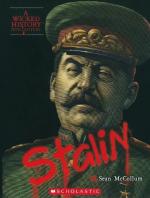
 Stalin, Joseph
 Joseph Stalin
 Joseph Stalin

