 Print
Print Word
Word PDF
PDF|
This section contains 180 words (approx. 1 page at 300 words per page) |

|
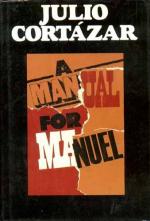
A Manual for Manuel resembles Cortazar's earlier novels, not only in its fragmented view of reality, but also in its focus on a particular group of individuals who choose to live outside the mainstream of society. Like The Winners' (1960) beleaguered passengers whose metaphysical voyage takes place on a sea of doubt and confusion, or Hopscotch's (1963) lost generation of intellectuals who spend their days in philosophical discussions that ultimately lead them nowhere, or 62: A Model Kit's (1968) multiple protagonists whose destinies come together to form an ever more complex web of relationships from which escape seems impossible, A Manual for Manuel's group of revolutionaries are also outsiders in their rejection of middle-class, bourgeois values. Unlike the other novels, however, it presents a group committed to social action. They are not satisfied with merely talking about life's ultimate meaning, or involving themselves in personal quests for ontological truth or existential integrity...
|
This section contains 180 words (approx. 1 page at 300 words per page) |
|