
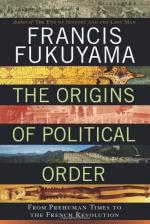
 Print
Print Word
Word PDF
PDF

|
| Name: _________________________ | Period: ___________________ |
This test consists of 5 multiple choice questions, 5 short answer questions, and 10 short essay questions.
Multiple Choice Questions
1. What king imposed the Magna Carta after a military defeat?
(a) King Mark.
(b) King John.
(c) Kind Edward.
(d) King George.
2. When did the Catholic church upheld the right of women to inherit property?
(a) 7th century.
(b) 11th century.
(c) 9th century.
(d) 8th century.
3. How much was the per capita spending on all government services, from armies and roads to schools and police on the street in Afghanistan in 2008?
(a) $150.
(b) $19.
(c) $50.
(d) $20.
4. When did the Romanov of Russia gain power according to Chapter 21?
(a) 1613.
(b) 1636.
(c) 1678.
(d) 1659.
5. How many taels of silver were left in the Chinese treasury in the early 17th century China?
(a) 370,000.
(b) 270,000.
(c) 70,000.
(d) 170,000.
Short Answer Questions
1. What was the population of China at the start of the Ming Dynasty?
2. What was the nickname of Empress Wu?
3. When did the Kwangju massacre take place?
4. What was the Ancien régime France an early prototype of?
5. How much did the European population increase between 1500 and 1600?
Short Essay Questions
1. How does Fukuyama rest his theory in Chapter 29?
2. What two countries are examples of states that failed to develop accountability in Chapter 25?
3. What eventually happened to the central authority of the state in Hungary?
4. What was a necessary step for accountability in France?
5. What are four differing results relating to accountability?
6. What happened between the Christian church and political authorities in Europe according to Chapter 18?
7. How does Fukuyama define accountability in Chapter 22?
8. What tips a state towards accountability according to Chapter 28?
9. What does Fukuyama distinguish between when discussing the "rule of law" in Chapter 17?
10. What has China repeatedly returned to according to Chapter 20?
|
This section contains 589 words (approx. 2 pages at 300 words per page) |
|





