
 Print
Print Word
Word PDF
PDF

|
| Name: _________________________ | Period: ___________________ |
This test consists of 5 short answer questions, 10 short essay questions, and 1 (of 3) essay topics.
Short Answer Questions
1. In Chapter Four: Living in Yellow, what does Deborah say she found in the cupboard?
2. In Chapter Three: Nets, what does Deborah discuss metaphorically falling apart?
3. In Chapter Two: The Tempest, what does Deborah reference Beckett saying grief is?
4. In Chapter Three: Nets, what does Deborah say the breaking of the family home is like?
5. In Chapter Four: Living in Yellow, what does Deborah say about this time in the house?
Short Essay Questions
1. In Chapter Three: Nets, what does Deborah say she and her ex-husband did to the family home? What did this action send her back to?
2. In Chapter One: The Big Silver, what does Deborah say the young woman talked about? What did the man say in response?
3. In Chapter Six: The Body Electric, what metaphor from earlier in the book did Deborah apply to the party she went to? How did she apply this metaphor to women?
4. In Chapter Two: The Tempest, what does Deborah say she had seen in Brazil? How had she applied this to her divorcee life?
5. In Chapter Five: Gravity, how does Deborah say she set up her shed? What did she furnish it with?
6. In Chapter Five: Gravity, who does Deborah say came to her rescue? How did this person rescue her?
7. In Chapter Four: Living in Yellow, where does Deborah say she moved? How does she say she thought about this move?
8. In Chapter Four: Living in Yellow, why did Deborah say she painted her walls yellow? Why did she paint them back to white?
9. In Chapter Two: The Tempest, who does Deborah say she met at a funeral? What was his story?
10. In Chapter One: The Big Silver, who was the couple Deborah Levy said she oversaw talking? How does she say they met?
Essay Topics
Write an essay for ONE of the following topics:
Essay Topic 1
Deborah and Clara compare their lives to their mothers' lives in generations past where women stayed at home and had children. Deborah compares herself to other women past, such as Simon de Beauvoir. How do these different women fight for their freedoms within the constraints of their societies? How do they negotiate freedom, and what cost do they pay for the freedoms they have? Choose at least five women in the autobiography to compare and align for this paper.
Essay Topic 2
In Chapter Four, Deborah says:
"I had energy because I had no choice but to have energy. I had to write to support my children and I had to do all the heavy lifting. Freedom is never free. Anyone who has struggled to be free knows how much it costs" (17).
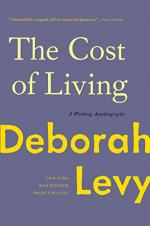
What is the cost of freedom according to the autobiography? And how does Deborah represent both her struggle and cost for freedom alongside others struggle and cost throughout the autobiography? Relate your reflection and inquiry to the title of the autobiography. What is the cost of living?
Essay Topic 3
Each of the chapters of Cost of Living has distinct titles, and each of these titles are tied together in segments of two or three themes throughout. Choose one of these segments of two or three chapters and examine how the titles are woven together, and how the titles reflect the content of the chapters. Connect what you find about the symbolism and the metaphor to the message of the book.
|
This section contains 992 words (approx. 4 pages at 300 words per page) |
|





