
 Print
Print Word
Word PDF
PDF

|
| Name: _________________________ | Period: ___________________ |
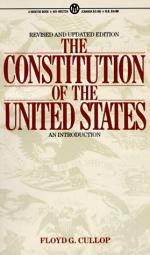
This quiz consists of 5 multiple choice and 5 short answer questions through Part I: Introduction to the Constitution.
Multiple Choice Questions
1. What do the states that make up the U.S. constitute?
(a) A federation.
(b) A community.
(c) A symposium.
(d) A confederation.
2. Who was the 16th President of the United States?
(a) Abraham Lincoln.
(b) John Adams.
(c) Alexander Hamilton.
(d) James Madison.
3. The U.S. government is currently located where?
(a) Philadelphia, Pennsylvania.
(b) New York, New York.
(c) Boston, Massachusetts.
(d) Washington, the District of Columbia.
4. What type of democracy is one in which the people elect officials in order to represent them in all aspects of government?
(a) Indirect.
(b) Federation.
(c) United.
(d) Direct.
5. Under the Articles of Confederation, there would be what?
(a) A central power, but no executive or judiciary.
(b) A central power, executive, and judiciary.
(c) A central power and executive, but no judiciary.
(d) No central power, executive, or judiciary.
Short Answer Questions
1. The U.S. is a group of individual states that afford certain specific duties and responsibilities to which government?
2. Attending the convention in Philadelphia for revision of the Articles of Confederation were delegates from all but which state?
3. When Cullop states the U.S. has a "government of the people, by the people, for the people," whom is he quoting?
4. If a person's preferred candidate is not elected, there will be another election in which that candidate has what option?
5. The Articles of Confederation was not the best plan for a number of reasons and fell by the wayside when?
|
This section contains 271 words (approx. 1 page at 300 words per page) |
|





