
 Print
Print Word
Word PDF
PDF

|
| Name: _________________________ | Period: ___________________ |
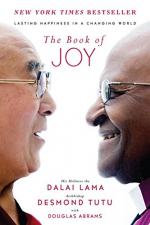
This quiz consists of 5 multiple choice and 5 short answer questions through Part III (Pages 145 - 213).
Multiple Choice Questions
1. What does Abrams write in the Introduction that overshadowed his happy childhood?
(a) Depression.
(b) Poverty.
(c) Addiction.
(d) Illness.
2. What does Jinpa point out that modern society has prioritized, to the detriment of society as a whole?
(a) Independence.
(b) Socialism.
(c) Captialism.
(d) Faith.
3. Who is the South African leader Tutu speaks admiringly of and at length in Part I?
(a) Eric Erickson.
(b) Moju Fremon.
(c) Nelson Mandela.
(d) Idris Bell.
4. Who is the Dalai Lama's longtime translator?
(a) Jasmine Jorge.
(b) Hoy Nguyen.
(c) Thupten Jinpa.
(d) Roman Fellows.
5. In what year did the Dalai Lama start making pilgrimages to different religious traditions?
(a) 2010.
(b) 1975.
(c) 1980.
(d) 1999.
Short Answer Questions
1. What have scientists discovered too much stress does to a specific part of our biological makeup?
2. What disease did Archbishop Tutu suffer from as a child?
3. Who does Tutu bring with him to visit the Dalai Lama?
4. What is the Sanskrit word for suffering?
5. What is one translation of mudita that the Dalai Lama brings up in relation to envy?
|
This section contains 221 words (approx. 1 page at 300 words per page) |
|





