
 Print
Print Word
Word PDF
PDF

|
| Name: _________________________ | Period: ___________________ |
This test consists of 15 multiple choice questions and 5 short answer questions.
Multiple Choice Questions
1. Analysts from where revealed to Eisman that no one truly understood these CDOs in Chapter 6?
(a) Rating companies.
(b) Banks.
(c) Magazines.
(d) Overseas.
2. Who was the head of the surveillance department at Moody in Chapter 7?
(a) Ernestine Warner.
(b) Vincent Daniel.
(c) Lewis Ranieri.
(d) Greg Lippman.
3. After the conference in Chapter 6, Eisman and his group began paying close attention to what?
(a) The Euro.
(b) Lending companies.
(c) The price of oil.
(d) Rating companies.
4. In Chapter 7, Steve Eisman learned that the rating companies were working with the same information as who?
(a) The Chinese.
(b) Himself.
(c) The investors.
(d) The government.
5. A percentage of FrontPoint was owned by what major investment firm?
(a) Morgan Stanley.
(b) Merrill Lynch.
(c) Wachovia.
(d) Citigroup.
6. What is the central banking system of the United States?
(a) The Federal Reserve.
(b) Wells Fargo.
(c) The World Bank.
(d) U.S. Bank.
7. FrontPoint Partners is a subsidiary of what company?
(a) Wachovia.
(b) Merrill Lynch.
(c) Bear Sterns.
(d) Morgan Stanley.
8. In Chapter 7, Eisman not only bought the CDOs offered by Lippmann, but he also began to short who?
(a) The SEC.
(b) The Wall Street banks involved in these bonds.
(c) The Federal Reserve.
(d) The London banks involved with the bonds.
9. When was the conference for subprime mortgage bond salesmen and buyers in Chapter 6?
(a) August, 2008.
(b) June, 2004.
(c) January, 2007.
(d) May, 2008.
10. In Chapter 8, Michael Burry found that his reports to his investors were appearing more and more bleak because of his heavy investment in what?
(a) Subprime mortgage CDSs.
(b) Subprime mortgage CDOs.
(c) Overprime mortgage CDOs.
(d) Overprime mortgage CDSs.
11. Where is Morgan Stanley headquartered?
(a) Nashville, TN.
(b) Boston, MA.
(c) Washington D.C.
(d) New York, NY.
12. What is the title of Chapter 8?
(a) The Long Quiet.
(b) Wall Street.
(c) Two Men in a Boat.
(d) Bonds and CEOs.
13. Who had the bright idea to set up a fund to sue the rating companies whom they blamed for the fiasco in Chapter 10?
(a) Charlie Ledley.
(b) Michael Burry.
(c) James Eastman.
(d) Michael Lewis.
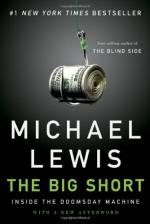
14. The mortgage boom and bust which is central in The Big Short: Inside the Doomsday Machine took place between what years?
(a) 2002-2006.
(b) 2005-2008.
(c) 2001-2007.
(d) 1999-2004.
15. Who is an American former stockbroker, investment adviser, non-executive chairman of the NASDAQ stock market, and the admitted operator of what has been described as the largest Ponzi scheme in history?
(a) Lewis Ranieri.
(b) Charlie Ledley.
(c) Greg Lippmann.
(d) Bernard Madoff.
Short Answer Questions
1. To what floor did Howie Hubler move after making a unique deal with his company in Chapter 9?
2. What is the title of Chapter 9?
3. How much ownership was Howie Hubler over his own company in the deal in Chapter 9?
4. The first night of the conference in Chapter 6, Steve Eisman was seated next to a man named what?
5. The first night of the conference in Chapter 6, Steve Eisman found himself attending a dinner thrown by what company?
|
This section contains 474 words (approx. 2 pages at 300 words per page) |
|





