
 Print
Print Word
Word PDF
PDF

|
| Name: _________________________ | Period: ___________________ |
This test consists of 15 multiple choice questions and 5 short answer questions.
Multiple Choice Questions
1. Who was A'Lelia Walker?
(a) A singer in a Harlem nightclub.
(b) The wife of an important politician.
(c) A society woman who gave frequent and grand parties.
(d) A patron of the arts who hired Hughes to write for her.
2. What college did Hughes cite as having an all-black faculty?
(a) Tuskegee.
(b) Grandlock.
(c) Fisk.
(d) Urbana.
3. How was Bricktop Ada known among her followers?
(a) She was aloof and sullen.
(b) She was angry and at times violent.
(c) She was talented and sexy.
(d) She was "regular," a good girl.
4. How did Hughes describe the cockroaches in New Orleans?
(a) They were the size of mice.
(b) They were loud and some of them flew through the air.
(c) They were the size of Buicks.
(d) They were small but noisy.
5. Why did Hughes decide to move from his apartment to an attic room up the hill?
(a) Because Bob, the drug addict, was frightening him.
(b) Because he missed Mary and needed to leave their apartment.
(c) Because he decided to move to Italy.
(d) Because he finally made enough money to afford a better apartment.
6. What famous author wrote the book "cane?"
(a) James Weldon Johnson.
(b) Margery Latimer.
(c) Jean Toomer.
(d) Julia Peterkin.
7. When Hughes entered Lincoln, what was the racial make-up of the Board of Trustees?
(a) The Board was all white.
(b) The Board was all black.
(c) The Board was 50% black.
(d) The Board was 20% black.
8. What made Hughes the "town curiosity" while he was in Italy?
(a) He was tall.
(b) He was very shy.
(c) He was a black man.
(d) He was an American.
9. Who did Hughes think of during his lunch with Mr. Barnes?
(a) His family in New York.
(b) His first poetry teacher at Columbia.
(c) His girlfriend Mary.
(d) His high school art teacher.
10. What did Hughes do with the twenty dollars he received from Crisis for his story?
(a) He saw Jeanne Eagels in "Rain" and then "What Price Glory."
(b) He saved it to give to his mother.
(c) He spent it all on food and liquor for himself and his friends.
(d) He ate a large steak at a fine restaurant.
11. How did Hughes meet Bricktop Ada Smith?
(a) She was a waitress in his favorite coffee house.
(b) She was the new tenant in his building.
(c) She was the new singer hired at the Grand Duc.
(d) She was a fellow Metro rider every morning.
12. When did Hughes write his first novel?
(a) During the summer of his junior year at Columbia.
(b) During the summer of his sophomore year at Yale.
(c) During the summer of his junior year at Lincoln.
(d) During the summer of his senior year at Howard.
13. Who wrote the play "The Mule Bone?"
(a) Zora Neale Hurston and Langston Hughes.
(b) Zora Hurston.
(c) Langston Hughes.
(d) Rowena Jelliffe.
14. At Hughes's college, what was the racial makeup of the faculty?
(a) All white.
(b) All black.
(c) Mixed ethnicities.
(d) Half white and half black.
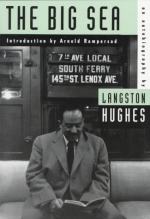
15. When Hughes wrote "The Big Sea," how many years had passed since he had worked on his survey?
(a) Twenty years.
(b) Eighteen years.
(c) Twenty five years.
(d) Ten years.
Short Answer Questions
1. What did Hughes hope to prove in his study of Lincoln University?
2. When did Wallace Thurman die?
3. What was "Fire?"
4. When did Hughes say he most felt like writing?
5. Who sang at A'Lelia Walker's funeral?
|
This section contains 644 words (approx. 3 pages at 300 words per page) |
|





