
 Print
Print Word
Word PDF
PDF

|
| Name: _________________________ | Period: ___________________ |
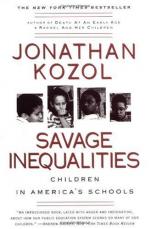
This quiz consists of 5 multiple choice and 5 short answer questions through Foreword and Prologue, "Looking Backward: 1964 to 1991,".
Multiple Choice Questions
1. What Supreme Court decision found that segregated education was unconstitutional because it was "inherently unequal"?
(a) Brown v. Board of Education.
(b) Davis, et. al. v. County School Board of Prince Edward County, VA et al.
(c) Plessy v. Ferguson.
(d) Briggs, et. al. v. Elliott, et. al.
2. How many years did Kozol spend visiting schools and speaking with children about their schools and neighborhoods?
(a) 1.
(b) 2.
(c) 3.
(d) 4.
3. What grade did Kozol teach while he was at the urban school in Boston?
(a) Fifth.
(b) Fourth.
(c) Second.
(d) Kindergarten.
4. Why does Kozol introduce his class to poetry?
(a) Because he did not have any lesson plans.
(b) Because he did not have any textbooks in his classroom.
(c) To familiarize students with a different form of literature.
(d) To reawaken the children's interest in school.
5. How did Kozol choose the cities that he visited?
(a) There was no special logic in the cities he chose to visit.
(b) He chose cities that had were ranked as the most dangerous.
(c) He visited cities where he had familiy.
(d) He visited cities with a high rate of infant mortality.
Short Answer Questions
1. In what year was the decision in Plessy v. Ferguson rendered?
2. In what month is black history celebrated in the public schools?
3. In what year did Kozol set off to visit schools and speak with children about education in urban areas?
4. What year did Kozol begin teaching in Boston?
5. How many children did Baldwin have in his classroom while teaching in the school located in the Boston suburbs?
|
This section contains 242 words (approx. 1 page at 300 words per page) |
|





