
 Print
Print Word
Word PDF
PDF

|
| Name: _________________________ | Period: ___________________ |
This test consists of 5 short answer questions, 10 short essay questions, and 1 (of 3) essay topics.
Short Answer Questions
1. What famous poet is referred to in this section?
2. A man who has not had the opportunity of celebrity must often replace it with which of the following?
3. Lies stand on how many legs?
4. In Franklin's opinion, what is the last organ to stop when a man dies?
5. To what does Franklin compare to a shadow in the sun?
Short Essay Questions
1. Franklin has many views regarding the value and length of a person's life. What does the author say?
2. What does Franklin have to say about starting a new year?
3. What is Franklin's moral advice on placing oneself above others?
4. What is the author's opinion on self control and even temperament?
5. What famous poet and philosopher is paid homage by Franklin? What was the poet known for posthumously?
6. What is the nature of sin? According to Franklin, why is it forbidden?
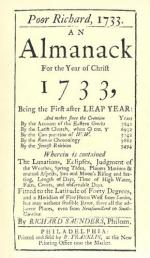
7. When was the original almanack published?
8. What part of the almanack may be difficult for people of today to understand?
9. Who was responsible for writing and compiling POOR RICHARD'S ALMANACK? Who was the true author?
10. How is a lie different than the truth in its steadfastness?
Essay Topics
Write an essay for ONE of the following topics:
Essay Topic 1
Discuss the creation of POOR RICHARD'S ALMANACK. When was it first created? What was its original purpose? Do you think Franklin was truly inspired to create the pamphlets or that he created them simply because he had the means to print them? When did the pamphlets evolve into books? How many pamphlets were there in total? How many books? How many revisions? Did the almanacks bring Franklin fame or fortune?
Essay Topic 2
Franklin had a lot to say about using one's time well. This thought appears in several different areas, from being industrious to making time for leisure and through to being outright lazy. Following are three of Franklin's many citations on the topic. Explain each. Also describe what Franklin meant by laziness and leisure. Compare and contrast the two items.
"Up, sluggard, and waste not life; in the grave will be sleeping enough."
"O Lazy-Bones! Dost thou think God would have given thee Arms and Legs, if he had not design'd thou should'st use them."
"A life of leisure and a life of laziness, are two things."
Essay Topic 3
People crave structure and discipline as a general rule. Franklin says that people will flock to places where there are good laws. What is meant by that statement? Who decides what should become law? What is the definition of a "good" law? Why does Franklin say, "Where there's no law, there's no bread?" How does that statement relate to "Where there is hunger, law is not regarded; and where law is not regarded, there will be hunger?" Does either statement refer to communism or a society providing for its own; or do the statements refer to theft? Explain.
|
This section contains 739 words (approx. 3 pages at 300 words per page) |
|





