
 Print
Print Word
Word PDF
PDF

|
| Name: _________________________ | Period: ___________________ |
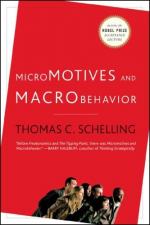
This quiz consists of 5 multiple choice and 5 short answer questions through Chapter 8: An Astonishing Sixty Years: The Legacy of Hiroshima.
Multiple Choice Questions
1. What does Schelling say happens when the youngest ten percent of a population moves?
(a) There is a new "youngest" ten percent.
(b) The population is now considered more distributed.
(c) The average age of the group decreases.
(d) The old people are next to
2. Why can the Golden Gate Bridge charge a double toll for traffic in one direction without fear of being unfair?
(a) Because even one-way drivers will return one day.
(b) Because people coming south have more money than people in the city.
(c) Because the traffic reverses direction at the end of every day.
(d) Because tolls are designed to repair social inequality.
3. In Schelling's analysis, what behavior governs the people filling the theater?
(a) Randomness.
(b) Group aversion.
(c) Chaos.
(d) Bunching behavior.
4. What does Schelling say the "tipping" critical-mass model first described?
(a) Political change.
(b) Dust being drizzles onto scales.
(c) The boom-bust cycle in economics.
(d) New ethnicities moving into neighborhoods.
5. What is an unconditional preference?
(a) A force of psychological nature.
(b) A preference that does not change regardless of others' actions.
(c) A preference that has to be adopted by all members of a group.
(d) A preference that does not acknowledge other alternatives.
Short Answer Questions
1. What additional explanation does Schelling offer for seat selection?
2. What was the status of nuclear weapons under Truman's successor?
3. What does Schelling say about offspring?
4. What is the central issue in the case Schelling presents regarding hockey helmets?
5. What does Schelling say would a density enhancement add to a closed model? Improved distribution modeling. Room for more factors to be included. Relief from certain mathematical constraints.
|
This section contains 372 words (approx. 2 pages at 300 words per page) |
|





