
 Print
Print Word
Word PDF
PDF

|
| Name: _________________________ | Period: ___________________ |
This test consists of 5 short answer questions, 10 short essay questions, and 1 (of 3) essay topics.
Short Answer Questions
1. What is the first of the seven most common causes of death for 85% of the elderly population, as discussed in Chapter 4?
2. Who was the first physician to correctly diagnose myocardial infarction?
3. What term, commonly known as a heart attack, results from the interruption of blood supply to a part of the heart, causing heart cells to die?
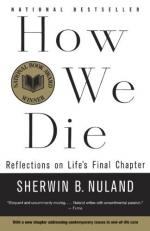
4. Where does author Sherwin B. Nuland, M.D. teach surgery and the history of medicine, according to the book’s Introduction?
5. What is the name of Janet Whiting’s husband described in Chapter 5?
Short Essay Questions
1. What does the author say in relation to the expectation of growing old in Chapter 4?
2. How does the author explain man’s need for oxygen in Chapter 6?
3. How treatable are cardiac events, according to the author in Chapter 1?
4. Who is Horace Giddens and how is he described by the author?
5. How do the brain and heart change as a person ages, according to the author in Chapter 3?
6. What statistics does Dr. Nuland provide relating to ischemic heart disease in Chapter 1?
7. How are heart problems and heart disease diagnosed and predicted, according to the author in Chapter 2?
8. How is “legal death” defined by the author in Chapter 6?
9. How does the author describe the metabolic changes of aging in Chapter 3?
10. What seven primary causes of death does the author cite for elderly patients in Chapter 4?
Essay Topics
Write an essay for ONE of the following topics:
Essay Topic 1
Discuss the mythology of dying. What authors, mythologies and religions does the author cite in his discussion of rituals and customs surrounding death? How has death been perceived by different cultures? Are any of these customs and beliefs considered more attainable than others? Why or why not?
Essay Topic 2
Describe the works of William Osler and Lewis Thomas. What theories and philosophies did these individuals present? What were the Ingersoll Lectures? Why does the author view the philosophies of William Osler and Lewis Thomas to be deceiving?
Essay Topic 3
Discuss the United States Department of Health and Human Services and the World Health Organization. How is “death” defined by each of these organizations? How must death be accounted for? Why does Dr. Nuland refer to death as having been turned into a bureaucracy?
|
This section contains 870 words (approx. 3 pages at 300 words per page) |
|





