
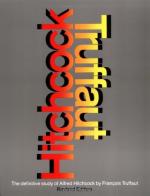
 Print
Print Word
Word PDF
PDF

|
| Name: _________________________ | Period: ___________________ |
This test consists of 15 multiple choice questions and 5 short answer questions.
Multiple Choice Questions
1. In "The Wrong Man", what was the occupation of the man accused of robbery?
(a) Musician.
(b) Teacher.
(c) House painter.
(d) Architect.
2. What did Hitchcock say about the frequency of his dreaming?
(a) He dreamed once or twice a week.
(b) He did not dream often.
(c) He had several vivid dreams every night.
(d) He never dreamed.
3. What did Hitchcock believe might be the reason that people felt the need to watch his films several times?
(a) The plots were so complex.
(b) The stories.
(c) The richness of detail on the screen.
(d) There were visual gags that could be missed.
4. Who starred in "Rear Window"?
(a) Cary Grant.
(b) James Stewart.
(c) Anthony Perkins.
(d) Peter Lorre.
5. Why were many scenarios for the "Notorious" 'MacGuffin' cast aside?
(a) The producer disliked them.
(b) They were too simple.
(c) They were too implausible.
(d) They were overly complex.
6. In what year was "Rope" filmed?
(a) 1948.
(b) 1952.
(c) 1943.
(d) 1945.
7. What did Hitchcock have the investigators search for in "Rear Window"?
(a) A murder weapon.
(b) The murder victim's head.
(c) Evidence of blood.
(d) The murder victim's fingerprints.
8. What kind of dreams did Hitchcock say he didn't have?
(a) Erotic dreams.
(b) Lucid dreams.
(c) Dreams in color.
(d) Nightmares.
9. Had Hitchcock not bought the rights to "Vertigo", who did Truffaut suggest might have bought them?
(a) A French director.
(b) James Stewart.
(c) MGM.
(d) Stanley Kubrick.
10. What was the female lead shown wearing in the opening scene of "Psycho"?
(a) A bra.
(b) A wedding dress.
(c) A trenchcoat.
(d) A sundress.
11. Who did Hitchcock prefer to cast in sexually-themed stories?
(a) Mysterious brunettes.
(b) Fiesty redheads.
(c) Sophisticated blonds.
(d) Raven-haired beauties.
12. What was "The Wrong Man" based on?
(a) A German film.
(b) A true story.
(c) A short story.
(d) A play.
13. How much did "Rope" cost to produce?
(a) $10 million.
(b) $1.5 million.
(c) $3 million.
(d) $5 million.
14. What complaint did Hitchcock have about the original script for "Spellbound"?
(a) It wasn't tight enough.
(b) The dialogue included offensive language.
(c) It was almost identical to another film he had made.
(d) It could only appeal to children.
15. How did Hitchcock describe his usual dreams?
(a) Disturbing.
(b) Quite reasonable.
(c) Adventurous.
(d) Forgettable.
Short Answer Questions
1. Which member of Hitchcock's family made an appearance in "Strangers on a Train"?
2. Who was the female lead in "Psycho"?
3. What kind of scene did "Psycho" start with?
4. How did Hitchcock come to work on "Strangers on a Train"?
5. What did a story that a farmer told Hitchcock about crows inspire in "The Birds"?
|
This section contains 471 words (approx. 2 pages at 300 words per page) |
|





