
 Print
Print Word
Word PDF
PDF

|
| Name: _________________________ | Period: ___________________ |
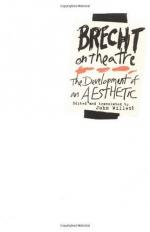
This quiz consists of 5 multiple choice and 5 short answer questions through 1948-1956 (Berlin), Section 2.
Multiple Choice Questions
1. Speech of outstanding _____ is discouraged in epic theatre.
(a) Clarity.
(b) Pace.
(c) Volume.
(d) Charisma.
2. In Piscator's Threepenny Opera, the _____elements were built in.
(a) Educative.
(b) Conjugative.
(c) Tonal.
(d) Coercive.
3. Where was Theaterarbeit published?
(a) Frankfurt.
(b) Munich.
(c) Dresden.
(d) Copenhagen.
4. _____ is a collection of Brecht's theoretical writings published by Surhkamp.
(a) Schriften zum Theater.
(b) Arbeitsbuch.
(c) Stucke.
(d) Versuche.
5. _____ means intelligible to the broad masses.
(a) Propaganda.
(b) Popular.
(c) Fatalism.
(d) Marxism.
Short Answer Questions
1. Length of scene was settled during _____.
2. The attitude of chasing away a fly is _____.
3. The poet's words in epic theatre are only sacred so far as they are _____.
4. The goal of epic theatre is less to moralize than to _____.
5. When asked who Brecht wrote for in "Conversations with Bert Brecht", he said that he wrote for people who wanted to have fun and didn't hesitate to keep their _____ on in the theatre.
|
This section contains 156 words (approx. 1 page at 300 words per page) |
|





