
 Print
Print Word
Word PDF
PDF

|
| Name: _________________________ | Period: ___________________ |
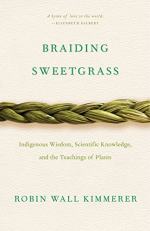
This quiz consists of 5 multiple choice and 5 short answer questions through Braiding Sweetgrass.
Multiple Choice Questions
1. The author states in "Epiphany in the Beans," "In a garden, food arises from" what (151)?
(a) Desire.
(b) Dedication.
(c) Partnership.
(d) Greed.
2. Who is the elder described that spoke of only carrying one bullet with him when he went deer hunting in "The Honorable Harvest"?
(a) Bruce.
(b) Lewis.
(c) Awiakta.
(d) Oren.
3. What is the animate form of "to be," in the author's people's language?
(a) Puhpowee.
(b) Wiingaashk.
(c) Ode'mini-giizis.
(d) Yawe.
4. To whom is the following quote attributed in "Burning Cascade Head"? "“The dance of renewal, the dance that made the world, was always danced here at the edge of things, on the brink, on the foggy coast" (288).
(a) Lewis Hyde.
(b) Bruce King.
(c) Paula Gunn Allen.
(d) Ursula K. Le Guin.
5. What does the third row represent in the author's metaphor for basket weaving in "Wisgaak Gokpenagen: A Black Ash Basket"?
(a) Science.
(b) Ecological well-being.
(c) Community.
(d) The spirit.
Short Answer Questions
1. In what type of environment do black ash trees thrive?
2. What is the name of the process in a bean shoot in which the vine inscribes a circle in the air?
3. To what clan is Tom Porter a member, according to the author in "Putting Down Roots"?
4. Who wrote The Mishomis Book?
5. What were the birch bark boxes that the author's ancestors carried sugar made from sap in called?
|
This section contains 242 words (approx. 1 page at 300 words per page) |
|





